
Micro Diary Writing for Busy Lives: Five-Minute Daily Note Taking
A five-minute diary practice does not require empty time. It requires a different idea of what diary writing can be.
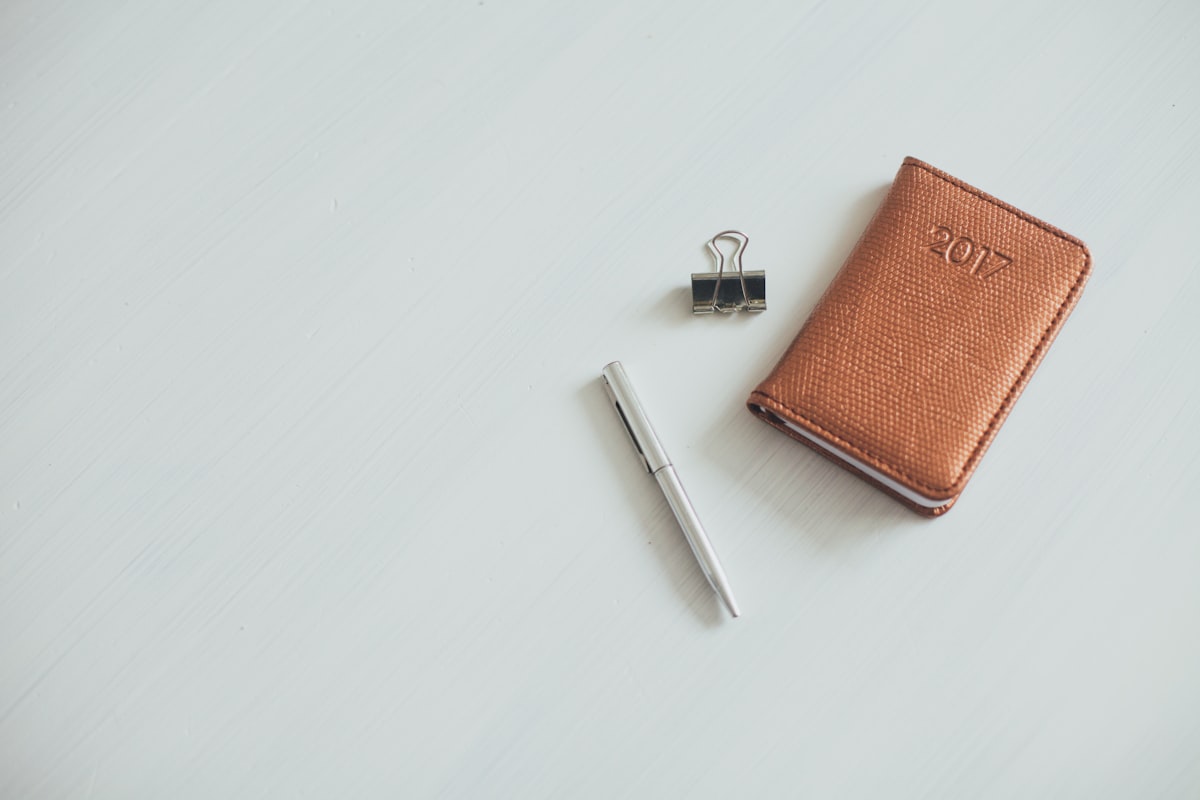
The idea that diary writing requires a quiet morning, an unhurried hour, and a particular frame of mind has kept a lot of people from writing at all.
Most days do not offer that. Most lives do not offer that. And so the diary sits untouched, waiting for conditions that rarely arrive.
The five-minute diary is built for the actual shape of a busy life. It is not a compromise. It is a different approach to the same practice — one that often proves more durable than the slower, more elaborate version.
What Micro Diary Writing Actually Means
A micro diary is not a truncated version of something larger. It is a practice in its own right.
The guiding principle is constraint: you write briefly, deliberately, and regularly. You are not trying to record everything. You are not trying to process your entire interior life on any given day. You are selecting one or two things worth noting and writing them down.
That act of selection is itself meaningful. When you have only five minutes, you cannot write about everything. So you must decide what actually matters today. That decision, made daily, becomes a kind of attention training — a habit of noticing what is true and significant in your own life.
Over weeks, a micro diary reveals patterns you would not have spotted otherwise. What you return to. What you avoid. What keeps surfacing even when you intended to write about something else.
The Myth of Needing Time
Busy people often imagine that diary writing belongs to a category of activities that require time they do not have — like cooking a meal from scratch or reading a novel.
But most diary entries that people genuinely value are not long. Rereading old journals, writers frequently discover that the entries they find most resonant are the brief ones. A sentence that captures a specific feeling. A short paragraph about something small that happened. A list of three things they noticed.
Length does not determine depth. Regularity does.
A five-minute entry written every day over a year produces something substantial: 365 small records of your interior life, your observations, your questions. That accumulation has weight. It has continuity. A two-hour entry written once a month, however beautifully written, produces something much less connected.
Finding the Five Minutes
The most effective micro diary practices are anchored to something that already happens.
You are more likely to write if writing does not require a separate decision. Instead, it attaches to an existing moment in your day — a habit that already has a reliable place in your routine.
Some anchors that work well:
- Morning coffee or tea. Before you look at your phone, write while the drink cools.
- Commute. On public transit, a note in your phone can serve as a diary entry.
- Lunch. A few minutes between eating and returning to work.
- Before bed. A brief note while the day is still recent.
- Transition moments. After a meeting, between tasks, in the three minutes before a call.
The anchor matters more than the time of day. It does not need to be the same anchor every day, but it helps to have a default — the moment you return to when everything else is uncertain.
What to Write
The common obstacle is not time. It is the blank page.
When you have five minutes, you do not have space to stare at that blank page for two of them. Having a loose structure helps. Not a rigid template, but a set of options you can choose from depending on the day.
The single observation. Something you noticed today that you want to remember. A detail, a moment, a fragment of conversation. It does not need to be significant. It just needs to be real.
The one honest sentence. What is actually true right now, stated simply. "I am tired and have been pretending otherwise." "Today was better than I expected." "I do not know what I want." These sentences are brief, but they are not small.
The quick list. Three things that happened. Two things that were good. One thing you are carrying. Lists lower the friction of writing and often surface more than you expect.
The question. A single question you cannot answer yet. Writing a question you are sitting with is a legitimate diary entry. It names something real without requiring resolution.
The memory. A brief note about something from the past that came to mind today. Why did it surface? What does it feel like now? You do not need to answer — just to note.
You do not need to use the same approach every day. Some days will call for a list. Others will call for that single honest sentence. Following what the day actually requires keeps the practice from feeling mechanical.
Paper or Phone
For a micro diary practice, the format question is almost entirely about friction.
Whatever you will actually open when you have five minutes is the right format. That is the whole consideration.
If your phone is always nearby and a paper notebook requires searching for a pen, the phone is probably the better choice — not because digital is superior, but because it removes an obstacle between the impulse to write and the act of writing.
If looking at your phone first thing in the morning pulls you toward email and social media before you can stop it, a paper notebook on your nightstand may protect a few minutes of honest writing before the day interrupts.
Some people maintain a consistent split: paper for the morning, a notes app for observations captured during the day. This works well when both formats are genuinely accessible. It does not work if maintaining two formats becomes its own task.
Choose what you will actually use. Then keep it accessible enough that reaching for it feels effortless.
Dealing with Gaps
A micro diary practice is not ruined by gaps. Gaps are part of any ongoing habit.
There will be weeks when you miss several days. There will be stretches when writing feels impossible and you leave the notebook closed. This is not failure. It is what real habits look like across real lives.
The question is not whether you maintain perfect consistency. The question is whether you return.
When you return after a gap, do not try to reconstruct what you missed. Do not write catch-up entries about the days you did not write. Just write today's entry. The continuity is in the returning, not in the coverage.
A diary full of small gaps is still a diary. It still holds what you chose to notice, and those choices still tell you something true about yourself.
What Accumulates
The value of a micro diary practice becomes clearest in retrospect.
After six months of five-minute entries, you have something that longer, less frequent writing rarely produces: texture. The grain of ordinary days. The repetition of small concerns. The slow movement of a mood across weeks. The things you stopped mentioning because they resolved, and the things you are still writing about because they have not.
This kind of record is not dramatic. It does not read like a memoir or produce sudden revelations. What it does is give you a clear and honest picture of your own interior life as it actually moved through a period of time.
That picture has uses that are hard to anticipate in advance. People who maintain consistent diary practices often report that rereading earlier entries clarifies things they did not understand while living through them — decisions that seemed complicated, fears that turned out to be temporary, patterns they could not see from inside them.
A five-minute daily practice produces this kind of record more reliably than any other format. Not because five minutes is special, but because daily regularity creates the continuous thread that makes patterns visible.
Starting Today
The most important thing about a micro diary practice is not the format, the anchor, or the prompts.
It is that you start — with whatever time you have, today, in whatever format is closest to hand.
You do not need to read about it further. You do not need to buy a new notebook or choose a specific app. You need to write something down, briefly, honestly, now.
Tomorrow, write again.
The practice begins the moment you stop thinking about beginning.


