
30 Autumn Journal Prompts for Reflection, Harvest, and Letting Go
Thirty autumn prompts for noticing the turn — the cooling light, the slow letting go, the quiet stock-taking — and writing your way honestly into the darker months.
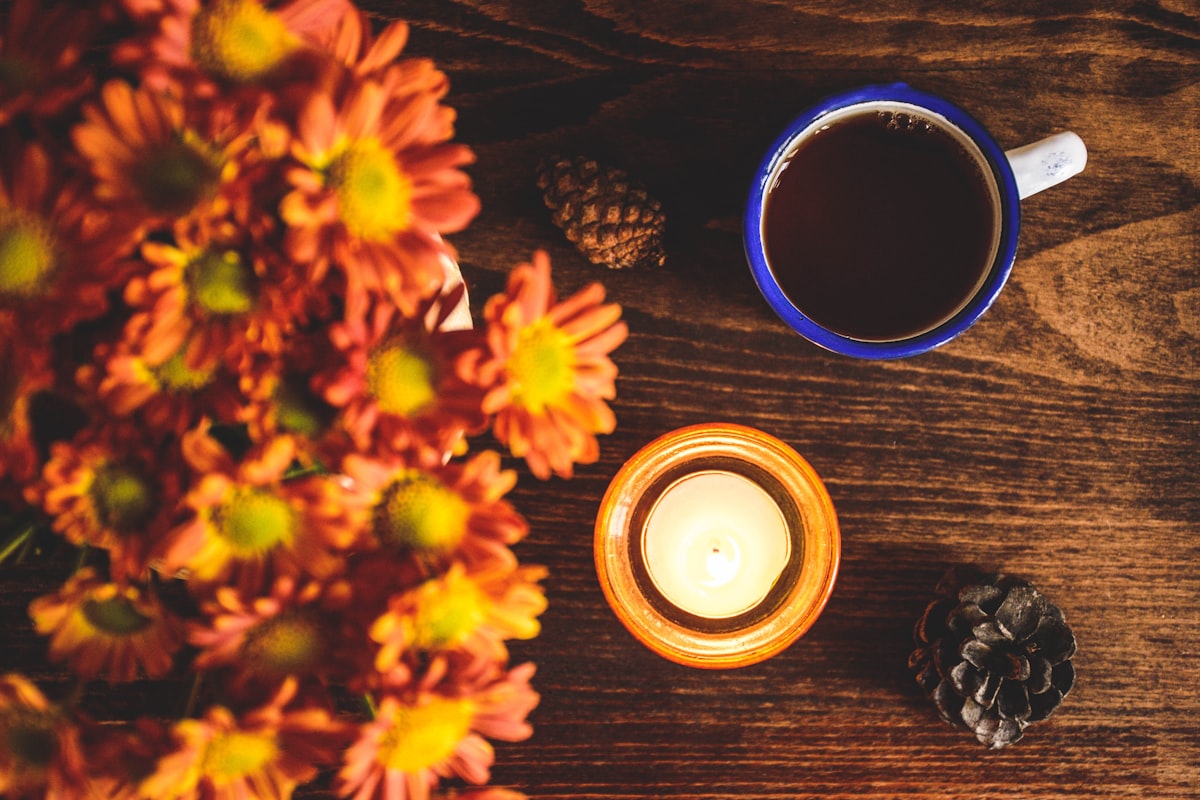
Autumn is the season that asks you to pay attention to endings. The light changes first, then the air, and at some point you notice that the year has tipped past its fullness and started its slow descent toward winter. It can feel like loss. It can also feel like relief.
These prompts are an invitation to write about the autumn you are actually having, rather than the one the season is supposed to deliver. Some years the turn brings a settled, golden calm — the relief of a slower pace after summer's noise. Some years it arrives with dread of the dark months, or a low grief you cannot quite explain, or the ordinary continuation of a year that has not gone the way you hoped.
All of those are worth writing about. The season does not owe you a particular mood, and you do not owe it one back.
Work through these slowly. You do not need to answer all thirty — pick the prompts that catch on something in you and stay with those. They move loosely from outward observation toward more interior reflection, but the order is not a sequence. Begin wherever the page is open.
Noticing the Turn
Before deciding what autumn should mean to you this year, it helps to look plainly at what is actually changing — the light, the air, the small physical facts of the season.
-
What was the first specific moment this year when you knew autumn had arrived? Where were you, and what gave it away — the light, the temperature, a smell, something you saw? Write the detail before any larger thought.
-
Describe the light where you live now compared to a month ago. What is it doing differently — the angle of it, the color late in the day, how early it leaves? Write it as plainly as you can.
-
What has the cooler air changed about your ordinary day — a coat you have started reaching for, a window you have stopped leaving open, a different time you want to be home? What shifted without you really deciding it?
-
What does autumn smell and sound like where you are? Damp leaves, woodsmoke, rain on the window, the particular quiet of shorter days. Write the sensory weather of an ordinary autumn evening.
-
How does your body feel as the year cools? Try to be specific — energy, appetite, sleep, where you carry tension, how you move through a room differently than you did in the heat.
How This Autumn Actually Feels
The cultural story of autumn is cozy abundance and golden calm. Some years that fits. Some years it does not. This section is for telling the truth about which kind of autumn this is.
-
What is the dominant feeling of this particular autumn for you, named as honestly as you can? Not what the season is supposed to feel like — what it actually does.
-
Is there a part of you that meets the shorter days with something heavier — dread, low mood, a pulling inward? What is underneath it, as best you can tell? Write toward it without trying to fix it.
-
What is something about this autumn that already feels different from previous ones you remember? It can be subtle — a difference in mood, in who is around you, in the shape of your days.
-
What did this summer take out of you, or give you, that you are carrying into the cooler months? The season does not start from nothing. What are you bringing with you into the turn?
-
If you had to describe the emotional weather inside you this autumn — separate from the actual weather outside — what would it be?
The Harvest: Taking Stock of the Year
Autumn is the traditional season of harvest, of gathering in what grew. Most years are not a clean success or a clean failure, and the honest account is usually more interesting than either.
-
The year is roughly three-quarters gone. What has it actually been about, if you had to name its quiet theme? Not what you planned for it — what it has actually turned out to be.
-
What is one thing you set out to do this year that you genuinely did, even partly? Sit with it long enough to actually feel it, rather than rushing past to what you did not manage.
-
What grew this year that you were not even trying to grow — a friendship, a skill, an understanding about yourself — that you only notice now, looking back?
-
What did you hope for back in the colder months of the start of the year that has quietly not happened? Is that a loss, a relief, or something you no longer recognize as something you actually wanted?
-
If this year were a field you were harvesting, what would the real yield be — the thing worth keeping, separate from everything you planted that did not come up?
What Is Ready to Be Let Go
Autumn lets things fall. The trees do it without struggle, and there is something in watching that worth borrowing. This section is for looking clearly at what you are carrying that does not need to come into the winter with you.
-
What have you been holding onto this year — a worry, a grudge, a version of a story, a way you talk to yourself — that you are tired of carrying? Name it specifically.
-
What expectation of yourself, set earlier this year, do you now know was not the right one? What would it look like to let it fall cleanly, without making yourself wrong for having held it?
-
What in your physical space feels heavier than it should as the year closes — a pile, a closed drawer, a project surface, a room you avoid? What is the smallest act of clearing it that you would actually do this week?
-
What relationship or commitment has quietly run its course, and what would it mean to release it gently rather than letting it drag on out of habit?
-
Trees do not grieve their leaves. What would it look like to let something go this season without the long internal argument you usually have about it first?
Turning Inward
As the days shorten, there is a natural pull toward the interior — toward rest, reflection, and a slower pace. Autumn is a good time to write toward that rather than resisting it.
-
The world is asking you to slow down and turn inward. Are you letting it, or are you pushing against the season's pace? What would it cost to ease off, and what might it give back?
-
What does comfort actually look like for you in the cooler months, as opposed to the version in the advertisements? Be specific about what genuinely restores you when the light goes early.
-
Shorter days change the shape of an evening. What do you want to do with the long dark evenings this year — what would make them feel like something other than just an absence of daylight?
-
Is there a part of you that has been running at full speed all year and has not stopped? What would it take to give it a real pause before winter, and why have you not yet?
-
What have you been too busy or too distracted to feel this year that the quieter season might finally have room for? Write toward it carefully.
Looking Toward Winter
Autumn is a threshold. It sits between the year's fullness and its rest, which makes it a natural place to look ahead — not with pressure, but with a clear eye on what is coming.
-
What do you want to have settled or finished before the year ends, and what is the honest first step toward it from where you are now?
-
Winter asks for a kind of inner provision — what you will lean on when the days are short and dark. What do you want to have in place before it arrives: a practice, a comfort, a person, a plan?
-
What is one small thing you would like to do regularly through the autumn, just because the season is right for it — a walk while the leaves turn, an evening ritual, a slower morning? Why have you not started yet?
-
If you could carry just one quality into the winter — more rest, more honesty, more steadiness, more gentleness with yourself — which would you choose, and what would living it actually require?
-
Imagine yourself in the depth of winter, looking back on this autumn. What would you most want to be able to say about how you spent the turning of the year? Write that sentence, and then notice what it is asking of you in the weeks you still have.
Working With These Prompts
You do not need to respond to all thirty, and you do not need to do them in order. Pick three to five that pull at you. Sit with each one long enough that the first answer — usually the easy or expected one — gives way to a second answer that is more honest.
A few of these prompts may surface more than you were expecting. The ones about what you are letting go of, about a relationship that has run its course, or about the heaviness some people feel as the days shorten can sometimes do that. If a prompt opens something that feels too big for the page in front of you, it is fine to set it down and return to it later, or move to a lighter prompt instead. None of these are exercises to push through.
Autumn writing tends to work best in slow, unhurried doses. A single prompt taken on a quiet evening, with the light already gone and something warm beside you, will often tell you more than a long session done in a rush. The season's own pace is an ally here, if you let it set the tempo.
You can also spread this list across the season rather than working through it at once. One prompt a week from the first cool morning through to the start of winter would carry you into the darker months with a fairly complete record of how this particular autumn went. That record tends to be more useful later than it feels while you are making it — especially in the middle of winter, when it helps to remember what the turning of the year actually held.
The point of seasonal writing is not to mark the calendar. It is to stay honestly in conversation with how your life is moving — through this autumn, and into whatever comes after.
Was this article helpful?
Thanks for your feedback!


