
Voice Recording Your Diary: A Beginner's Guide to Audio Journaling
How to use your voice instead of a pen to keep a diary — including what works, what to expect, and how to get started.
What Audio Journaling Is
Audio journaling is keeping a diary by speaking rather than writing. Instead of opening a notebook, you open a recording app and talk.
The practice is older than it sounds. People have recorded their thoughts into tape recorders for decades. What has changed is that you now carry a capable recording device in your pocket at all times, which makes audio journaling more accessible than it has ever been.
You do not need to transcribe your recordings for this to count as journaling. The speaking itself is the practice. The act of putting your thoughts into spoken words, organizing them into sentences, and hearing yourself say them aloud does something different than writing — and for many people, it works better.
Who Audio Journaling Is For
Writing is not the right tool for everyone.
If you find that putting pen to paper feels effortful in a way that blocks you before you have even started, audio journaling may suit you better. The same is true if you process your thoughts more naturally through speaking than through writing, if physical limitations make handwriting uncomfortable, or if you simply prefer the pace of speech to the pace of writing.
Audio journaling is also useful in situations where writing is impractical. You can record while walking, driving, cooking, or sitting in a parked car. The portability of your voice is one of its most significant advantages.
This does not mean audio journaling is easier than written journaling. It is different. Some people find speaking to a device more self-conscious at first than writing in a private notebook. That discomfort usually fades with practice.
What You Will Need
The barrier to starting is very low.
A Recording Device
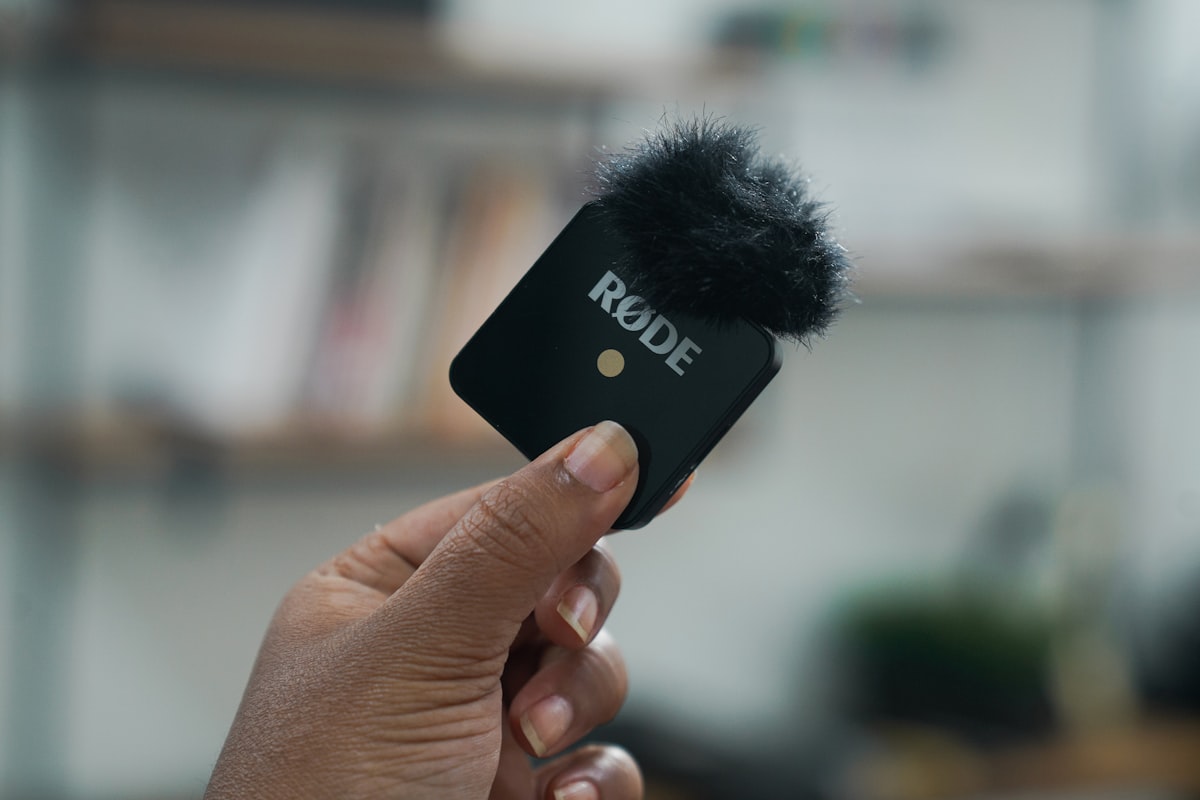
Your smartphone is sufficient. Every modern phone includes a built-in voice memo or voice recorder app, and these are adequate for personal journaling. You do not need a dedicated microphone or specialized equipment.
If you prefer to use a dedicated device, small digital voice recorders are available and offer good audio quality. Some people like the distinction of having a dedicated device for this practice — it creates a clear separation between personal recording and everyday phone use.
A Recording App
If you use your phone, you have several options:
- Built-in apps. Your phone's native voice memo app works well and stores recordings automatically.
- Dedicated journaling apps. Some apps combine written and audio entries, allowing you to keep everything in one place.
- Simple transcription apps. If you want a written record of your recordings, apps that automatically transcribe speech to text can do this work for you.
Start with whatever is already on your phone. Complexity in setup often delays starting.
A Private Space
This is the most important practical requirement. Audio journaling requires that you feel safe enough to speak honestly.
For most people, this means a space where they are alone and unlikely to be overheard. Your car is often ideal — it is private, contained, and many people find it easy to talk while seated there. A quiet room at home works equally well. Some people record while walking, though outdoor spaces make privacy harder to guarantee.
You will not speak honestly if you are worried about being heard. Finding a reliable private space is not optional — it is the foundation of the practice.
Getting Started: Your First Recording
Your first recording does not need to be good. It needs to exist.
Press record and say the date. Then say something honest — how you are feeling right now, what is on your mind, what happened today that you are still thinking about. Do not plan what you are going to say before you say it.
Silence is allowed. If you lose your thread, pause. Speaking your thoughts aloud in real time is not the same as performing a speech. The recording is private.
Most people feel awkward during their first few recordings. The sound of your own voice can feel strange when you are listening to yourself talk about something personal, and the awareness of the recording often creates a slight self-consciousness.
This tends to settle after a few sessions. The device stops feeling like an audience and starts feeling like what it is: a tool.
How Long to Record
There is no required length.
Some entries might be two minutes. Others might run to fifteen or twenty. Let the content determine the length rather than imposing a target. You will know when you have said what you needed to say.
If you are struggling to begin, a short time commitment helps. Telling yourself you will record for just three minutes removes the pressure of an open-ended session and makes starting easier.
What to Talk About
The same things you would write about.
Your day. A conversation that stayed with you. Something you are worried about. A decision you are trying to make. Something you noticed but did not have time to think about until now.
You can also use verbal prompts to get started:
- "Right now I am feeling..."
- "The thing I keep coming back to is..."
- "What I have not said out loud yet is..."
- "Something I want to remember about today is..."
These are not requirements. They are starting points for sessions where you cannot immediately find your thread.
Managing Your Recordings
This is something to decide early, before you have accumulated many recordings.
Storage
Recordings take up storage space. If you record regularly, your phone's memory will fill over time. Options include:
- Deleting recordings after a set period — one week, one month, or whenever you feel done with them.
- Automatically backing recordings up to cloud storage.
- Keeping only recordings that feel significant and deleting the rest.
There is no correct approach. The question is what you want from your recordings: a real-time practice where the act of speaking is the point, or an archive you can return to.
Privacy
Audio recordings are more immediately revealing than written diaries. Your voice carries tone, hesitation, and emotion in ways that text does not.
Consider where your recordings are stored and who might have access. Enable phone encryption if you use your phone to record. If privacy is a significant concern, use an app that stores recordings locally rather than in the cloud, or delete recordings after listening to them.
Transcription
Some people prefer to have a written record of what they have said. Automatic transcription tools have improved significantly and can convert speech to text with reasonable accuracy, though they make errors with names, unusual words, and rapid speech.
Transcription is optional. If you are not interested in rereading what you have said, there is no need to transcribe. The practice works without it.
Combining Audio and Written Journaling
Audio and written journaling are not mutually exclusive.
Many people use audio journaling on days when writing feels difficult — when they are tired, moving between places, or when the feeling they need to process is too immediate to sit down and write about. They return to written journaling when they want to work through something with more deliberation.
The two practices are complementary. Speaking is fast and emotionally direct. Writing is slower and tends toward more structured reflection. Using both gives you access to different modes of self-examination.
Some people listen back to a recording and then write in response to it — a kind of dialogue between speaking self and writing self that can surface unexpected clarity.
Common Concerns
"My voice sounds strange on recordings."
Almost everyone finds this. The voice you hear on a recording is closer to what other people hear than the voice you hear inside your own head, and the difference takes time to accept. It becomes less noticeable with repeated listening.
"I do not know what to say."
Start with the simplest possible thing: what you did today, how you slept, what you ate for lunch. Concrete small details often lead naturally into more substantial reflection.
"I worry someone will find the recordings."
This concern deserves a practical response, not dismissal. Delete recordings you would not want found, enable phone encryption, or choose an app with a password lock. Protecting your privacy is a reasonable thing to do.
"What if I listen back and cringe?"
You may. Most people find that old recordings are uncomfortable in some way — too revealing, too circular, too dramatic. This is also true of old diary entries. The discomfort is not a sign the practice is failing. It is a sign that something real was happening.
Building a Consistent Practice
Audio journaling does not require daily sessions to be useful.
Record when something needs to be said — after a difficult conversation, at the end of a hard day, when you are trying to work through a decision. You can also record on a schedule if structure helps you, though the schedule should serve the practice rather than become an obligation that makes the practice feel like a task.
What makes any journaling practice sustainable is that it remains genuinely useful. If you pick up audio journaling and find it helps you process your thoughts, clear your mind, or simply feel heard by yourself, it is worth continuing. If it does not suit you, something else will.
The goal is not to maintain a particular format. It is to have a practice that helps you know yourself more clearly — whatever form that takes.


