
Junk Journaling for Beginners: Turning Everyday Scraps into a Creative Practice
A practical guide to junk journaling — what it is, what to save, how to build or buy a book that can hold it all, and how to make pages from the paper you already throw away.
What Junk Journaling Is
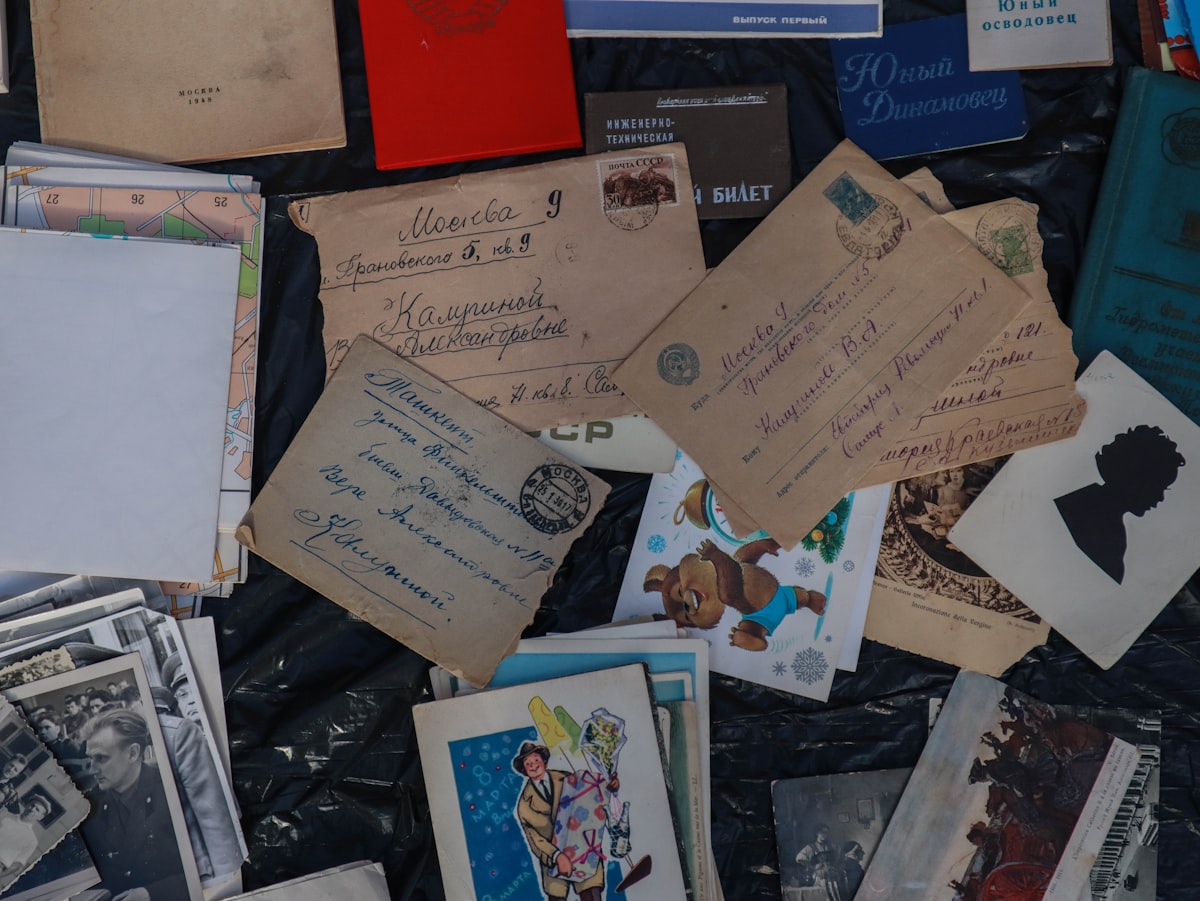
A junk journal is a book built from paper other people would throw away. Envelopes, receipts, ticket stubs, packaging, old book pages, sheet music, maps, wrapping paper, product tags, the printed insert that came with something you ordered — all of it becomes material for the pages, and often for the book itself.
The name is honest. The value of a junk journal is that it is made from things with no value. Nothing on the page cost anything or was bought to be there. It arrived in your life for some other reason, and you kept it instead of binning it.
That is the difference between junk journaling and the neater visual practices it sits beside. It is scrappier than collage journaling, more textural and less composed than art journaling. The aesthetic leans toward layers, pockets, tucked-in scraps, and a slightly overstuffed, well-handled feel. A good junk journal page looks like it has been lived with.
It is worth saying plainly what a junk journal is not. It is not a scrapbook of your best photographs, arranged and captioned. It is not fine art. It is a place to keep the paper evidence of ordinary days, and to enjoy the making of the pages as much as anything you write on them.
Why Save Your Own Rubbish
There is a specific satisfaction in building something out of material that was headed for the recycling.
Found paper carries a particularity you cannot invent. A real train ticket holds the date, the route, and the small typographic ugliness of the actual system that printed it. A torn corner of packaging brings a color and a texture into the book that you would never have chosen from a shop. The specificity of a real object anchors a page in a way that fresh, bought supplies rarely do.
Junk journaling also removes the two barriers that stop most people making visual pages: cost and the fear of drawing. You do not need to buy materials, because the materials are already accumulating in your home. You do not need to draw, because the work is choosing and arranging, not rendering. Almost anyone can tear a page from a magazine and glue it beside a sentence.
There is a quieter benefit, too. Once you keep a junk journal, you begin to see the paper flowing through your days. The envelope becomes a page background. The tag becomes a label. The receipt becomes a record of an afternoon. You start noticing texture and print on surfaces you used to discard without a glance, and that attention is worth more than any single page it produces.
What to Save
The engine of a junk journal is a habit of collecting, kept running quietly in the background so that you always have material on hand.
Almost anything flat and papery is a candidate. To make that less abstract, here is the kind of thing worth keeping:
Everyday ephemera. Ticket stubs, receipts, boarding passes, appointment cards, parking slips, the paper band from around a bunch of something, coasters, coffee cup sleeves.
Packaging and print. Tea and product boxes flattened out, the printed insert from a parcel, tissue paper, patterned bags, labels peeled carefully from jars, stamps and postmarked envelope corners.
Old paper with character. Pages from a book already falling apart, sheet music, an old atlas or dictionary, dressmaking patterns, ledger paper, anything with faded print and a worn surface.
Text and color for backgrounds. Magazine pages torn for their color or type, junk mail with good lettering, wrapping paper, calendar pages, brochures.
The rule for what to keep is not "does this relate to my life." It is "does this have presence." A color that holds your eye, an interesting piece of type, a texture, a shape, a printed fragment. Meaning gets made later, on the page, when the scrap sits next to your words.
Keep a folder, an envelope, or a shoebox near where you journal, and feed it as things cross your path. When you sit down to a page, you reach in and pull out a few pieces with presence. You never have to manufacture material from nothing, because the box has been filling itself all week.
The Book Itself
Junk journaling differs from most journaling in one way: the book is often part of the project. There are three routes, and none is more correct than the others.
Buy a notebook and fill it. The simplest start. Any notebook with sturdy paper works. Because junk journaling adds weight, glue, and tucked-in scraps, the same rule applies as for collage — thin paper buckles and tears at the binding once pages thicken. Paper around 100 gsm or heavier, in a hardcover binding, holds up to the swelling that a filling junk journal always produces.
Build a book from scraps. For many people this is the heart of the practice. You gather pages of different papers — an envelope, a piece of card, a folded map, a brown paper bag cut down — and bind them together into a book that is itself made of junk. This is more involved, and worth a section of its own below.
Repurpose an old book. An unloved hardback from a charity shop can become a junk journal. You tear out some pages to make room for the swell, glue others together for sturdier bases, and build your pages over the existing print. The old text showing through becomes part of the texture.
If you are unsure, buy a cheap mixed media notebook and begin. You can always build a book from scratch once you know you enjoy the practice. Starting with a bought book removes the binding question entirely and lets you find out whether junk journaling suits you before you invest an afternoon in construction.
Building a Book From Scraps
If you want to make the book itself, the simplest reliable method is a small stitched booklet, and you can make one in an evening with no special tools.
Start by gathering your pages. Aim for folded sheets of roughly the same size — a mixture of plain paper, an envelope opened flat, a page of old book, a piece of patterned bag, some lighter card. Fold each in half. A stack of five or six folded sheets, nested inside one another, makes a section the bookbinding world calls a signature.
To hold the signature together, open it flat to the center fold, make three or five evenly spaced holes along the crease with a pushpin, and sew through them with any strong thread, in and back so both ends meet and can be tied. This is a pamphlet stitch, and it is the entire skill you need to bind a small book.
A few signatures made this way can be glued into a cover — a folded piece of thicker card, or the boards from that repurposed old book — to make something more substantial. But a single sewn signature is already a working junk journal. Many people never build anything more complicated.
The point of building your own book is not craftsmanship. It is that the container becomes part of the record. A book whose very pages are old envelopes and torn maps holds a different feeling than a bought notebook, before you have written a single word.
A Small Kit of Tools
Beyond the collected paper and the book, the kit is short.
A glue stick, and something stronger later. A glue stick handles most paper and light card, and is enough to begin. For heavier pieces, tags, or anything that must truly stay put, a PVA glue holds far better. As with any pasted page, glue the whole back of a piece rather than the corners, or the edges lift and catch.
Scissors, and your hands. Scissors give clean, deliberate edges. Tearing gives soft, feathered ones, often showing the pale core of the paper along the line. Both are useful, and choosing between them is a small compositional decision on every piece.
A pen that writes over paper. A waterproof fineliner writes cleanly across most glued surfaces and on the open paper between elements. One reliable pen does more for the practice than a drawerful.
Washi tape, if you want it. Not essential, but junk journaling uses tape freely — to attach things, to reinforce a fold, to add a strip of color or pattern. It is forgiving because it lifts and repositions in a way glue does not.
That is the whole kit. A box of saved scraps, a book, glue, scissors, a pen, and perhaps some tape. Everything else is an addition you make later, when a specific page asks for it.
Making a Page
A junk journal page works mostly on its arrangement and its layers, and a few habits make both easier.
Place before you paste. Lay all your elements on the page and move them around before any glue comes out. Try the largest piece in three positions. Turn a scrap. Slide something to the edge. Only when the arrangement feels settled do you attach, working from the back layer forward. Gluing the first piece down before placing the rest is the fastest route to a page you wish you could undo.
Start with a background. Junk journal pages usually begin with a layer that covers most of the base — a sheet of patterned paper, an opened envelope, a page of old book, a wash of pale color. The background sets the temperature of everything on top.
Let one element lead. Most strong pages have a single dominant piece, with the others in support. If everything competes for attention, nothing holds it. Choose what the page is mostly about and let the rest play a smaller role.
Add pockets and tuck-ins. This is where junk journaling has its own character. Glue a piece of paper down along three edges only, leaving the top open, and you have a pocket. Into it go loose scraps, a folded note, a tag, a small photograph — things the reader can pull out and put back. A tag on a string, a folded flap that opens, a small envelope glued to the page: these interactive layers are much of the pleasure of the form.
Leave somewhere to write. It is easy to fill a page so completely with paper that no room remains for words. Keep a patch of plainer surface, or a tag, or a light-colored scrap, where your handwriting can land.
Bringing in the Writing
A junk journal is still a journal. The paper is the pleasure, but the writing is what keeps the pages legible to you later.
Write last, in most cases. Handwriting needs a stable, dry surface, and trying to write across a freshly glued page produces uneven, frustrated lines. Let the layers settle, then add your words on top or in the open space around them.
The writing does not have to explain the scraps. A page is more interesting when the words and the pasted material comment on each other rather than describe each other. A ticket from a day out beside a sentence about something unrelated that happened on it. A bright fragment of packaging next to a line about a day that did not feel bright at all.
If you are unsure how much to write, a date and a sentence is enough. Tuck a longer note into a pocket if you have more to say. Years later, it is the writing that lets you re-enter the day. A page of pasted scraps alone tends to lose its meaning once you have forgotten why each piece mattered.
Keeping It Sustainable
Junk journaling asks more of a page than plain writing, so daily entries tend to exhaust the practice quickly. Gathering, arranging, gluing, building pockets, and writing can easily fill half an hour or more.
A more durable rhythm is once or twice a week, with longer, layered entries, while a separate notebook holds your quicker daily writing if you keep one. The junk journal becomes a slower companion to your weeks rather than a daily obligation.
Keep the collecting going in the background regardless. The box of scraps fills itself if you let it, so material is always waiting and you never sit down to an empty page with nothing to build from.
And as with any journal, do not try to catch up after a gap. Open the book to the next blank page and start fresh. A stretch of unused pages is honest. It usually means your attention was needed elsewhere, and that is part of the record too.
Common Pitfalls
A handful of mistakes recur for new junk journalers, and knowing them in advance shortens the learning curve.
Saving everything. A collection with no filter becomes a pile you cannot use. Keep the pieces with presence and let the rest go to the recycling as it always would have.
Gluing before arranging. Pasting the first piece down before placing the others is the most common source of pages you regret. Always lay everything out first.
Overfilling the page. More material is not better. A page with a few well-placed pieces and some open space almost always reads better than one packed edge to edge. When in doubt, remove a piece.
Under-gluing. Corners-only gluing produces lifted edges that tear and catch on facing pages. Glue the whole back of every piece, and use something stronger than a glue stick for heavy material and pockets.
Leaving no room to write. A junk journal with no words tends to go quiet over time. Keep a plain surface somewhere on every page, even if it is only a tag.
Comparing your book to the ones online. The junk journals that circulate on social media are curated, photographed in good light, and often posted only because they were the best of a much larger, messier pile. Real books are full of pages no one would share.
What This Practice Becomes
A junk journal kept for a year is a dense, tactile object unlike a written diary of the same length. It has weight and thickness and a slightly unruly edge. Turning the pages, you pull tags from pockets and unfold flaps and feel the actual paper of your months — the ticket you held, the envelope that arrived, the torn corner of something you touched.
Because it is built from the physical debris of your days, it holds a kind of evidence that writing alone does not. The specificity of real objects brings a time back in a way prose, on its own, often cannot.
Junk journaling is not art, and it is not therapy. It is a way of paying attention to your life and keeping the proof of it, assembled from the paper you chose not to throw away and anchored with a few honest words.
Start with a box of scraps, a book, and a glue stick. Make one page this week. Whatever it becomes is enough.
Was this article helpful?
Thanks for your feedback!


