What to Write in Your Journal When You Have Nothing to Say
The blank page is not your enemy. Here are honest, practical ideas for when your mind feels empty and your pen feels heavy.
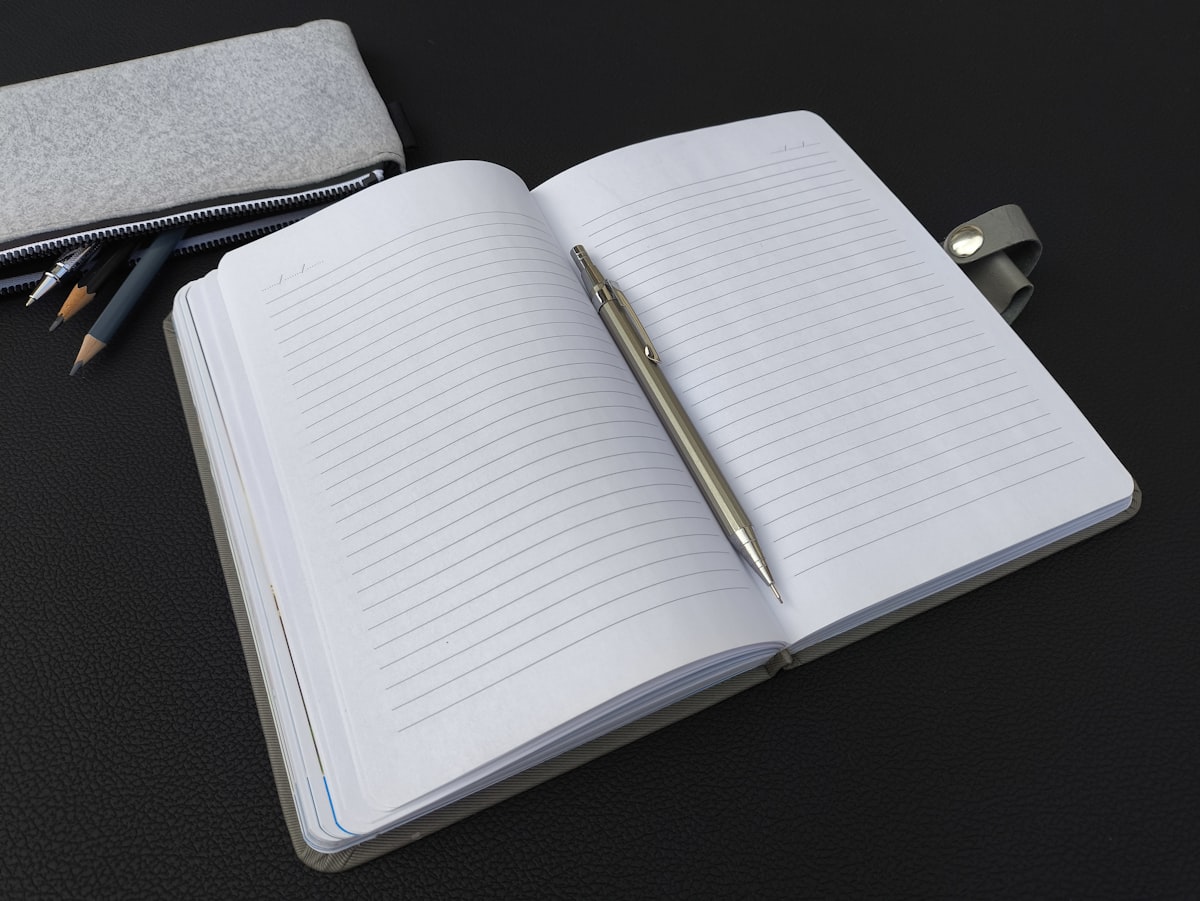
You sit down. You open your journal. You stare at the page. Nothing comes.
This is one of the most common experiences in journaling, and it is not a sign that something is wrong. A blank mind is not an empty mind — it is usually a full one that does not know where to start.
Here is the good news: you do not need something to say. You just need to start writing.
Write About Having Nothing to Write
This sounds circular, but it works. Begin with the truth: I have nothing to write about today. My mind feels blank. I sat down because I said I would, and now I am here with nothing.
Something almost always follows. The act of acknowledging the blankness often clears it, like admitting you are lost is the first step to finding your way.
Describe Your Surroundings
Look around and write what you see. Not with literary ambition — just with attention.
The light is gray this morning. There is a cup of cold coffee to my left. The radiator is making that clicking sound again.
Noticing is a form of writing. And writing what you notice trains you to pay attention, which is one of the deepest gifts a journaling practice can offer.
Write a List
When sentences feel like too much, lists lower the barrier:
- Five things I can see right now
- Three sounds I hear
- What I ate today
- Things I am putting off
- Small things that made me smile recently
Lists are entries. They count. Do not let anyone tell you otherwise.
Answer One Simple Question
Pick one and write whatever comes:
- How is my body feeling right now?
- What is the weather doing, and does it match my mood?
- What is one thing I know to be true today?
- What would I tell a friend who is having the kind of day I am having?
- What am I looking forward to, even if it is small?
You do not need to answer deeply. A surface-level answer is fine. Sometimes the pen takes you deeper on its own.
Copy Something You Read
If your own words are not coming, borrow someone else's. Copy a quote, a line from a book, a lyric, a sentence from an article. Then write your reaction to it, even if your reaction is just: I do not know why I like this, but I do.
This is a legitimate journaling practice. Monks have done it for centuries.
Write Badly On Purpose
Give yourself permission to write the worst journal entry of your life. Boring, pointless, badly written, full of complaints. No one will ever see it. The purpose is not to produce something good — it is to keep the channel open between your mind and the page.
Bad entries are the compost from which good entries eventually grow.
The Real Secret
The days when you have nothing to say are often the days when journaling matters most. Not because something profound will emerge (though it might), but because showing up when it is hard is how a practice becomes a practice.
A journal is not a highlight reel. It is a place for the ordinary, the uncertain, and the unfinished. Those entries are not failures. They are the foundation.
Write anyway.