
Washi Tape and Stickers: Decorating Your Journal Without Any Drawing Skills
Washi tape and stickers let you make journal pages that feel personal and finished, even if you have never been able to draw a straight line.
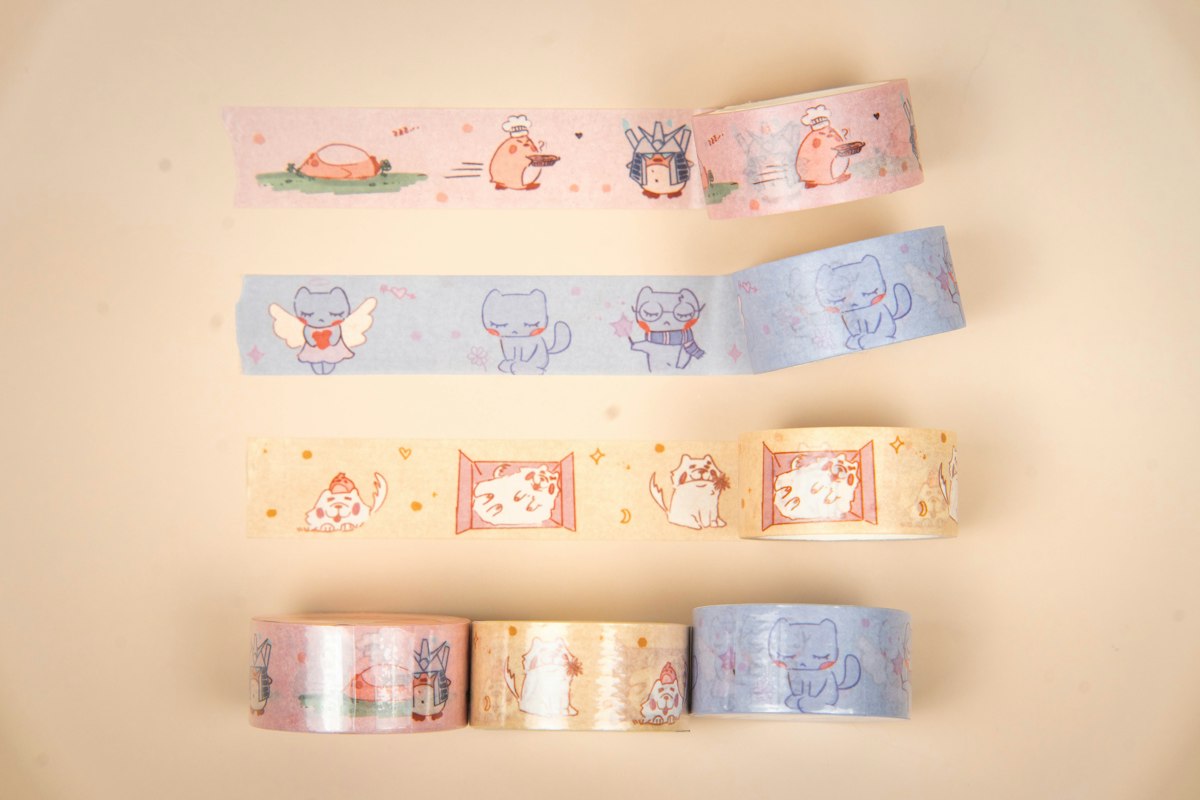
Some people open a notebook and feel the pull to draw in the margins. Others feel the opposite. The idea of sketching a leaf or lettering a header produces a small tightening, a sense that whatever comes out of the pen will look wrong.
If you are in the second group, washi tape and stickers are worth knowing about. They let you add color, texture, and structure to a page without asking your hand to do anything it does not already know how to do. You tear, you place, you press down. That is the whole skill.
This is not a lesser form of decoration. It is simply a different one, built on choosing and arranging rather than drawing.
What Washi Tape Actually Is
Washi tape is a thin, low-tack paper tape that originated in Japan. The name comes from washi, a traditional Japanese paper, although most rolls sold today are made from a range of paper fibers rather than the traditional kind.
What makes it useful in a journal is a combination of three qualities.
- It tears by hand. You do not need scissors, and the slightly rough torn edge looks intentional rather than messy.
- It is repositionable. For the first few minutes, you can lift a strip and move it without tearing the page underneath. On most paper it will not lift cleanly after that, so make your adjustments early.
- It is slightly translucent. You can often see a faint shadow of what is underneath, which means layering two tapes creates a third color without any effort on your part.
Rolls come in widths from a few millimeters to several centimeters, and in every pattern you can imagine: solid colors, stripes, grids, botanical prints, text, maps, and plain kraft paper.
Simple Ways to Use Washi Tape on a Page
You do not need a plan before you begin. Most of these take less than a minute.
A strip across the top. Lay a single piece of tape along the top edge of the page and write the date on it or just below it. This one move makes a page look framed and finished.
Corner tabs. Fold a short piece of tape over the edge of a page so half sits on the front and half on the back. You now have a tab you can find by touch, which is useful for marking monthly sections or entries you want to return to.
Taping things in. Washi tape was practically made for attaching ephemera: a ticket stub, a pressed flower, a fortune from a cookie, a receipt from a meal you want to remember. Tape the corners down rather than gluing. If you want to lift the item later to read the back, you can do so carefully.
Dividing a page. A thin vertical strip down the middle turns one page into two columns. A horizontal strip separates the morning from the evening, or what happened from how you felt about it. The tape becomes a structural element rather than just a decorative one.
A frame for a short entry. Four strips around a small block of space create a box. Write a single line inside it: a quote, a word for the day, one thing you noticed. Framed text feels more weighted than the same text left loose on the page.
Choosing Tape Without Overbuying
Washi tape is inexpensive per roll and very easy to accumulate. Many people end up with dozens of rolls they rarely use.
A more useful starting set is small and coherent. Consider beginning with five or six rolls:
- Two or three solid colors that sit well together
- One subtle pattern, such as a thin stripe or grid
- One neutral, such as kraft brown or cream
- One narrow roll, around five millimeters, for fine borders
A limited palette has a real advantage. When every roll goes with every other roll, you stop deliberating over combinations and start using them. The pages across a whole notebook also begin to look related to one another, which is a quietly satisfying thing to see when you flip back through.
You can add a seasonal roll or a patterned one you love later. Starting small just keeps the supplies from becoming a project of their own.
Stickers: Ready-Made Images for People Who Do Not Draw
Stickers solve the same problem from a different angle. Instead of asking you to draw a coffee cup beside an entry about a morning at a cafe, a sticker gives you the cup.
There is a wide range available, and they tend to fall into a few broad types.
Functional stickers include small icons, date labels, checkboxes, and tabs. These are popular in planners, but they work just as well in a diary. A tiny sun or cloud beside the date records the weather in a way you will notice instantly when you look back.
Decorative stickers are illustrations, florals, animals, objects, and patterns. These are the ones most people picture, and they can carry a lot of a page's mood on their own.
Word and phrase stickers carry printed text. These are useful when you want a header but do not trust your lettering. They can also feel generic, so use them where the phrase genuinely fits.
Blank labels are plain shapes you write on yourself. They give your own handwriting a defined home on the page, which many people find makes it look neater than it does when floating in open space.
Matte stickers tend to sit more naturally on journal paper than glossy ones, and they are easier to write over with an ordinary pen if you want to add a note. Clear or vellum stickers let the page show through, which helps them blend in rather than sitting on top.
Building a Page Without Drawing Anything
Here is a simple approach for a page that looks considered, using only tape, a sticker or two, and your usual pen.
- Write your entry first. Leave a little space at the top and along one side.
- Add a strip of washi tape along the top edge. Write the date on it.
- Look back at what you wrote and choose one sticker that responds to it: a mug, a leaf, a train, an umbrella.
- Place the sticker in the margin near the part of the entry it relates to.
- If there is an object worth keeping from the day, tape it in at the bottom.
That is all. It takes perhaps three minutes, and the page now carries a small visual record of the day alongside the written one.
Some people prefer to decorate first and write into the space they have created. That works too. Just notice whether decorating first makes the writing easier or makes it feel like a box you now have to fill neatly. If it is the latter, write first.
When the Decorating Starts to Crowd Out the Writing
It is worth being honest about the main risk here. Decoration that requires no skill also requires very little friction, which means it can expand to fill whatever time you give it.
You may notice that you have spent twenty minutes choosing tape and arranging stickers and have written two sentences. Or that you hesitate to open the journal on a hard day because the page would not look as nice as the previous ones. Both are signs that the decoration has quietly moved from supporting the practice to replacing it.
A few habits help keep the balance:
- Give yourself a rough limit, such as five minutes of decorating per entry.
- Allow plain pages. A notebook that alternates between decorated and undecorated entries is a normal, honest notebook.
- Remember who the journal is for. The polished spreads you may have seen online are often made to be photographed. Your journal does not have an audience.
The writing is the part that will matter most when you reread these pages in a few years. The tape and stickers are how the page says welcome.
Practical Notes on Paper and Longevity
A few small details make a difference over time.
Washi tape holds well on most journal paper, but it can lift on very smooth or coated pages, especially in humid conditions. A firm press with your fingernail or the back of a spoon helps it adhere.
Stickers and taped-in items add thickness. A notebook filled with them will not close flat. If that bothers you, spread the bulkier pages throughout the notebook rather than clustering them, or choose a journal with a little extra room in the binding.
Most washi tapes are not marketed as archival, and some may yellow or lose adhesion over many years. For pages you expect to keep for a long time, this is worth knowing, though for most everyday journaling it is not a serious concern.
A Page That Feels Like Yours
There is a common assumption that a beautiful journal requires an artistic hand. Washi tape and stickers quietly undo that assumption. They shift the creative act from making marks to making choices: which color, which image, where it sits, what it sits beside.
Those choices are personal. Over a few months, they add up to a notebook that looks unmistakably like it belongs to you, even though you never drew a thing.
You only need a roll of tape and an entry to begin. Place one strip across the top of tomorrow's page and see how it feels.
Was this article helpful?
Thanks for your feedback!


