
Your Notebook as a Quiet Refuge: Stress Relief Through Diary Writing
When anxiety builds, your personal diary becomes a safe place to release what's tangled inside. Learn how simple diary writing can calm your nervous system and help you feel more like yourself again.
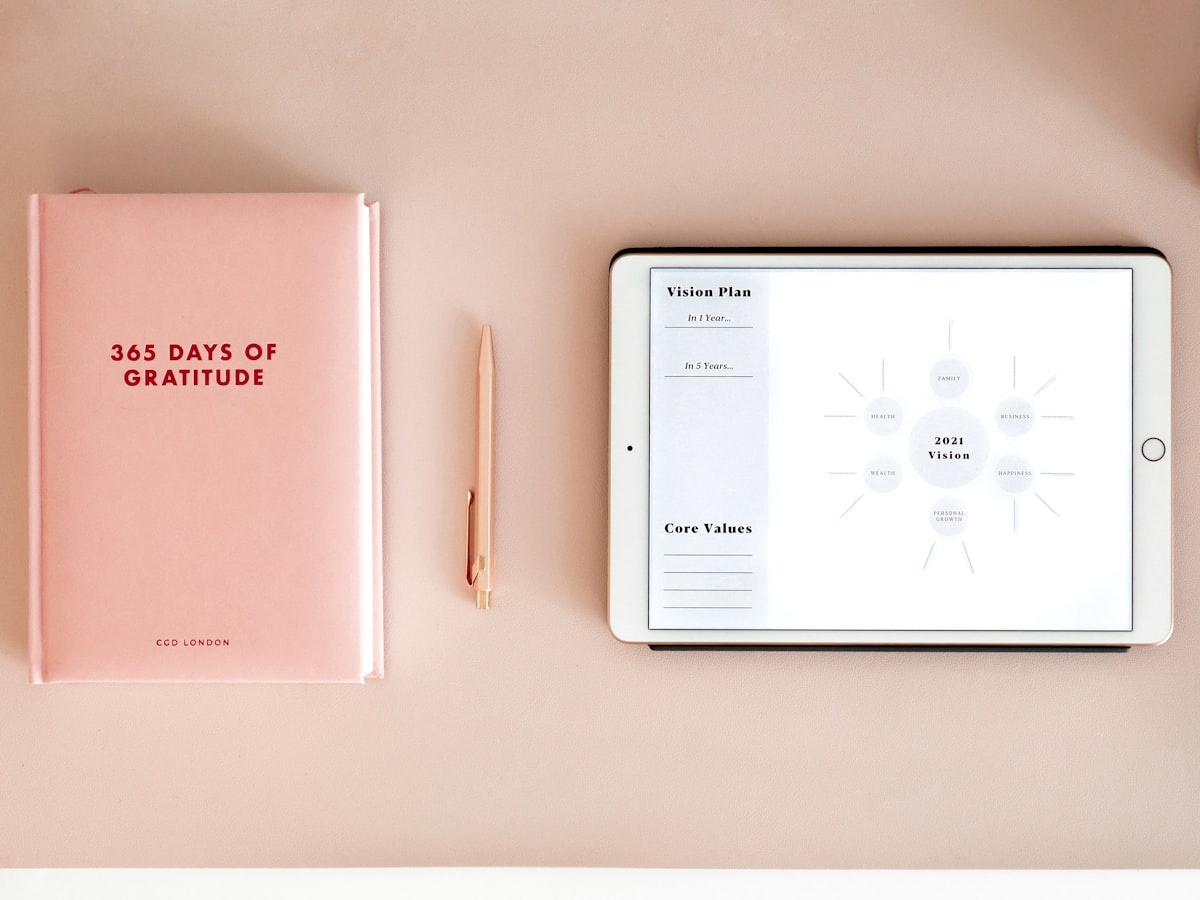
When I first started keeping a diary during a particularly difficult season, I didn't think of it as therapy. I just needed somewhere to put the thoughts that wouldn't stop circling. What I discovered was something quieter than relief—it was permission.
Your notebook asks nothing of you. It doesn't judge, doesn't interrupt, doesn't offer unsolicited advice. It simply holds space for whatever's inside.
The Body Knows Before the Mind Does
Notice what happens in your chest right now. Can you feel the weight there.
Stress doesn't live only in our thoughts. It settles into our shoulders, our jaw, our breath. When we carry anxiety without releasing it, our bodies stay in a state of alert—ready, tense, waiting for the next thing to go wrong.
Diary writing interrupts that pattern. The act of moving a pen across paper (or fingers across a screen) sends a signal to your nervous system: we're safe enough to slow down. You're translating the scattered energy inside into something external, something you can see and hold.
When you write, you're not just describing stress. You're metabolizing it.
Starting Where You Are
Perhaps you're thinking: I don't know what to write about. That's actually perfect.
You don't need eloquence or structure. You don't need to make sense. A stress diary thrives on mess—on the honest, unfiltered version of what's happening inside you right now.
Open your notebook. Write one sentence about what's bothering you today. It might be simple: I'm tired and everyone wants something from me. Or it might be vague: something feels wrong but I can't name it.
That's enough to begin.
Some days you'll write pages. Other days, three lines. Both matter equally.
The Two Forms of Release
There's something particular that happens when you write by hand on paper. The friction, the slowness, the physicality of it—these things allow your nervous system to downshift. Your brain can't race ahead when your hand is working steadily through words.
If you prefer typing on a phone or tablet, that works too. The digital form is faster, sometimes more natural for certain minds. What matters is the act itself—the externalization, the naming, the witnessing of your own experience.
I've sat with people who found their clarity through handwritten diary entries and others who needed the speed of typing to keep pace with their racing thoughts. Neither is wrong. Your hands know what they need.
What Happens When You Write About Stress
When you describe what's stressing you, something shifts. The anxiety stops being a formless weight and becomes something with edges, dimensions, maybe even some give to it.
You might discover what you actually need (rest, a conversation, movement, time alone). You might notice patterns—how certain situations trigger the same tightness, the same spiral. You might surprise yourself with your own wisdom.
Writing doesn't solve everything. But it does something remarkable: it makes you the witness to your own life instead of someone being overwhelmed by it.
A Gentle Practice
Your stress diary doesn't need rituals or special supplies. A notebook and pen. A notes app. Five minutes before bed or during your lunch break.
The only rule: show up without performance. Write as though no one will ever read this—because perhaps they won't. That freedom changes everything.
Some gentle starting points:
What am I carrying right now that feels too heavy?
What small thing, if it went away, might help me breathe easier?
What does my body need that I haven't given it?
Sitting With Difficult Things
There's a misconception that writing about stress makes it worse, that putting sadness or anxiety into words magnifies it.
Actually, the opposite tends to be true. Stress that stays inside, unspoken and unnamed, has a particular kind of power. It grows in the dark. It affects us in ways we don't fully understand.
When you write it down, you're bringing it into the light. You're saying: I see you. You're real, and I'm not ignoring you anymore.
That act of witnessing—of your own hand writing the truth—is itself a form of care.
The Quiet Accumulation
You don't need to reread what you've written. Some people do, and that can be valuable. But many find the greatest relief simply in the act of writing itself.
Over weeks and months, something settles. The acute panics may remain, but they exist alongside something else now: evidence that you've survived previous worry. Proof that difficult feelings do eventually ease.
Your diary becomes a map of your resilience without you even trying to build one.
Beyond Words
Sometimes the most powerful diary entries are fragments. A single word. A question mark. A line that goes nowhere.
Your notebook isn't a place to get it right. It's a place to get it out.
This is where the untidy, complicated, contradictory parts of you get to exist without apology. Where you can be both strong and struggling, both capable and overwhelmed. Where you can hold all of it at once.
That kind of honest space is rare. Your personal diary is one you get to create for yourself.
When stress climbs into your chest, when your mind won't quiet, when you don't know what to do with all that feeling—reach for your notebook. There's a reason humans have been writing their way toward clarity for centuries.
Your pen is waiting. Your page is blank.