
30 Journal Prompts for Making Hard Decisions
Thirty journal prompts for writing through a hard decision: naming the real choice, weighing what matters, facing the fear, and taking the next small step.
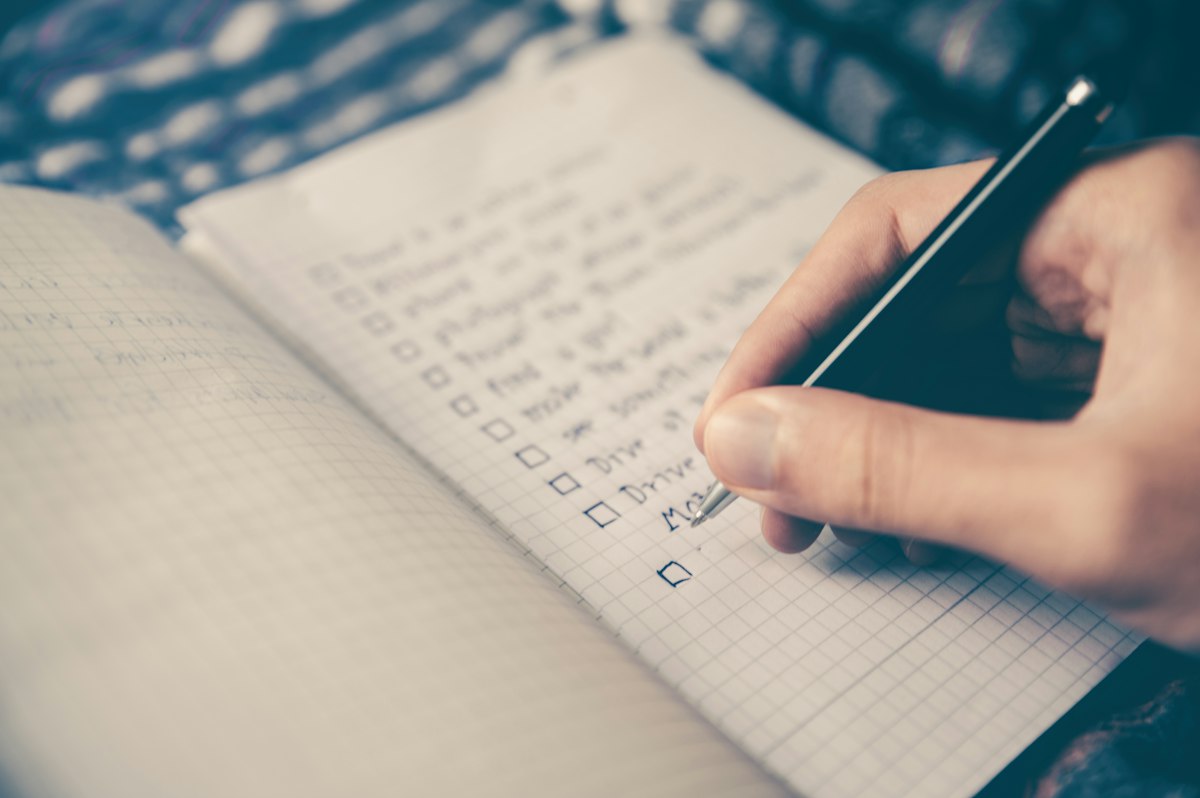
Some decisions resolve themselves. You weigh them for a day or two, and then one morning the answer is simply there.
Others do not. They sit in the background for weeks, surfacing when you are trying to sleep, shifting a little every time you talk them over with someone new. You make a list of pros and cons, and the list comes out even. You ask for advice, and everyone says something different.
Hard decisions are hard for reasons that a list cannot capture. The options are rarely as clean as they look. The real question is often hidden underneath the obvious one. And fear, obligation, and other people's voices tend to crowd the room so thoroughly that it becomes difficult to hear what you actually want.
Writing helps because it slows everything down. On the page, you can separate one strand from another, notice which arguments you keep returning to, and see your own reasoning from a slight distance.
These prompts will not make the decision for you. No set of questions can do that, and it would be dishonest to pretend otherwise. What they can do is help you understand the decision well enough that, when you do choose, you know why.
You do not need to answer all thirty. Start with the first section, then move to whichever feels most relevant. Some decisions need every section. Others become clear after five prompts.
Naming the Real Decision
Many hard decisions are hard partly because the question itself is unclear. Before you weigh any options, it helps to state plainly what you are actually deciding.
-
Write the decision you are facing in a single sentence, as simply as you can. Then read it back. Is that really the question, or is there a different one underneath it?
-
What exactly are your options? List every one you can think of, including the ones that seem unrealistic, the ones you have already dismissed, and the option of not deciding yet.
-
Is this decision truly either-or, or have you been treating it that way? Look at your list again. Is there a third path, a middle version, or a way to combine parts of two options?
-
When does this decision actually need to be made? Write the real deadline, if there is one, and then the deadline you have been imposing on yourself. How far apart are they?
-
How reversible is this choice? If you choose one way and it goes badly, what could you undo, and what could you not? Be specific rather than general.
What Is Pulling You Each Way
Every option has a pull. Some of that pull comes from what you want, and some comes from what you think you should want. These prompts are for sorting one from the other.
-
For each option, write a paragraph beginning, "The part of me that wants this believes..." Let each part make its full case without interruption.
-
Imagine you have already chosen, and you have told no one yet. Which option do you secretly hope you picked? Write down the first answer, even if you do not trust it.
-
Which option would you choose if no one else ever found out what you decided? Is that different from the one you would choose if everyone knew?
-
What do you stand to gain from each option that you could not get any other way? What would each one cost you that you could not easily get back?
-
Is there an option you keep returning to even though you have told yourself it is not practical? What keeps drawing you back to it?
Fear, Pressure, and Other People's Voices
Very few decisions are made in private. They are shaped by the expectations of family, partners, friends, and the version of yourself you think you are supposed to be. These prompts are for making those voices visible.
-
Whose opinion about this decision do you find yourself imagining most often? Write what you think they would say. Then write what you would say back, if you were being fully honest.
-
List the fears attached to each option. Next to each fear, write whether it is likely, possible, or very unlikely. Which fears remain once you have sorted them?
-
What is the worst realistic outcome of each option? Not the catastrophic version your mind produces at three in the morning, but the plausible bad result. How would you cope if it happened?
-
Are you leaning toward one option mainly to avoid disappointing someone? Who is it, and what do you imagine would happen if you did disappoint them?
-
What would you tell a close friend who was facing exactly this decision, with exactly your circumstances? Write the advice in full, as if you were speaking to them.
Your Values and What Matters Over Time
A decision that fits your values tends to be easier to live with, even when it turns out imperfectly. These prompts ask you to step back from the immediate choice and consider what you care about most.
-
Name three things that matter most to you in life right now. Then look at your options. Which one supports those three things best? Which one quietly works against them?
-
Imagine yourself one year from now, having chosen each option in turn. Write a few sentences describing an ordinary Tuesday in each version of your life. Which day would you rather live?
-
Now imagine yourself ten years from now looking back. Which choice do you think that older self would be glad you made? Which one might they regret not trying?
-
Think of a past decision you are glad you made, especially a difficult one. What helped you make it? Is any of that available to you now?
-
Think of a past decision you regret. What did you know at the time that you ignored? Is there anything similar happening in this decision?
Testing Your Options on Paper
Sometimes the fastest way to understand a choice is to live inside it briefly, in writing, before you commit. These prompts are small experiments you can run without any real-world risk.
-
Write the sentence "I have decided to..." and finish it with one of your options. Sit with it for a moment. Notice what happens in your body. Then do the same with another option. What did you feel each time?
-
Write a short letter to yourself from six months in the future, after choosing the option you are most afraid of. What does that future self want you to know?
-
If you had to decide in the next five minutes, with no more thinking allowed, what would you choose? Write it down before you have time to reconsider, then write why.
-
What information are you missing that would make this decision easier? Is it information you can actually get? If so, how, and by when?
-
Is there a small, low-risk way to test one of your options before committing fully? A conversation, a visit, a trial period, a smaller version of the change? Describe what it would look like.
Making the Choice and Living With It
At some point, reflection needs to become a decision, and the decision needs to become a step. These closing prompts are for that transition, and for the time after it.
-
Based on everything you have written, which option are you leaning toward now? Write it plainly, in one sentence, without justifying it.
-
What would you need to accept in order to choose that option? A loss, a risk, a disappointment, an uncertainty that will not go away? Name it as specifically as you can.
-
What is the very first concrete step toward that choice? Not the whole plan, just the next action. When will you take it?
-
What support would help you follow through? Who could you tell, what could you prepare, or what could you remove from your path to make the next step easier?
-
Write a short note to yourself for the day this decision feels uncertain again. Remind yourself why you chose what you chose, and what you knew when you made it.
How to Use These Prompts
Hard decisions rarely resolve in a single sitting, and there is no need to force that. You might write through one section each evening over a week, or spend a long afternoon with the first three sections and return to the rest later.
A few practical suggestions can make the process more useful:
- Date every entry. Your thinking will shift, sometimes sharply. Dates help you see whether a change reflects a real insight or simply a bad day.
- Write by hand if you can. Slower writing tends to produce more honest answers, especially for prompts about fear and other people's opinions. If you prefer typing, that works too.
- Answer the uncomfortable version first. When you notice yourself composing a reasonable, balanced response, stop and write the answer you would not want anyone to read. You can soften it later if you need to.
- Keep the practical facts in view. Money, timing, health, and responsibilities to other people are real constraints. Reflection that ignores them can drift into fantasy. Reflection that is ruled by them entirely can keep you stuck. Both belong on the page.
If the options feel too tangled to write about in sentences, it can help to lay them out visually first. A mind map with the decision at the centre can show you which parts of the problem are connected before you start writing through them.
When You Keep Changing Your Mind
It is common to finish one entry leaning firmly one way and to wake the next morning leaning the other. This is not a sign that journaling has failed. It usually means that both options genuinely have something to offer, and that part of you is grieving whichever one you do not choose.
If this happens, try reading back all your entries together after a week or two. Look for the arguments that keep reappearing regardless of which way you are leaning. Those tend to be the ones that matter most. The arguments that appear only once, on a particularly anxious or hopeful day, often carry less weight than they felt at the time.
It can also help to notice whether you are genuinely uncertain or simply afraid. Uncertainty sounds like "I do not know which is better." Fear sounds like "I know which I want, but I am scared of it." The two call for different responses, and your journal will often reveal which one you are facing.
When No Option Feels Right
Sometimes you work through every prompt and every option still feels wrong. This can mean the real choice has not appeared yet, and it may be worth returning to the first section with fresh eyes.
It can also mean that every path carries a genuine loss, and that the decision is less about finding the right answer than about choosing which loss you can live with. That is a harder kind of decision, and there is no prompt that can make it painless. What writing can do is help you make it with open eyes rather than in a rush to end the discomfort.
For people who tend to go over and over the same question, it is worth setting a limit. Decide in advance how many days or entries you will give this, and when that time is up, choose. More thinking does not always produce more clarity. Sometimes it only produces more loops, and a gentler approach to overthinking may help more than another list of pros and cons.
What a Journal Cannot Do
It is worth being honest about the limits here. A journal can help you understand your own thinking, surface fears you had not named, and hold a difficult question steady long enough to look at it properly. It cannot give you information you do not have, and it cannot predict how things will turn out.
For decisions involving your health, your finances, legal matters, or your safety, the page is a place to prepare your thinking, not a replacement for advice from people qualified to give it. Writing down your questions before you speak to a doctor, an advisor, or a lawyer is one of the most practical uses of a journal there is.
If a decision is weighing on you so heavily that it is affecting your sleep, your eating, or your ability to get through the day, that deserves more than reflection. Talking with someone you trust, or with a counsellor or therapist, can help in ways a notebook cannot.
After You Decide
Once you have made your choice, consider keeping one more entry: a short record of what you decided, why, and what you knew at the time. Many people find this unexpectedly useful later.
Decisions look different in hindsight. If things go well, you will have a record of the courage it took. If they go badly, you will be able to see that you made a reasonable choice with the information you had, which is all anyone can do. Either way, you will have something more reliable than memory, which tends to rewrite our reasons once the outcome is known.
Most hard decisions do not end with certainty. They end with a choice made carefully enough that you can stand behind it, and then with the ordinary work of living inside it, one day at a time.
Was this article helpful?
Thanks for your feedback!


