
Starting a Commonplace Book: A Home for Every Line Worth Keeping
How to start a commonplace book — what to collect, how to organize it, and how to turn a notebook of borrowed lines into something that is yours.
What a Commonplace Book Is
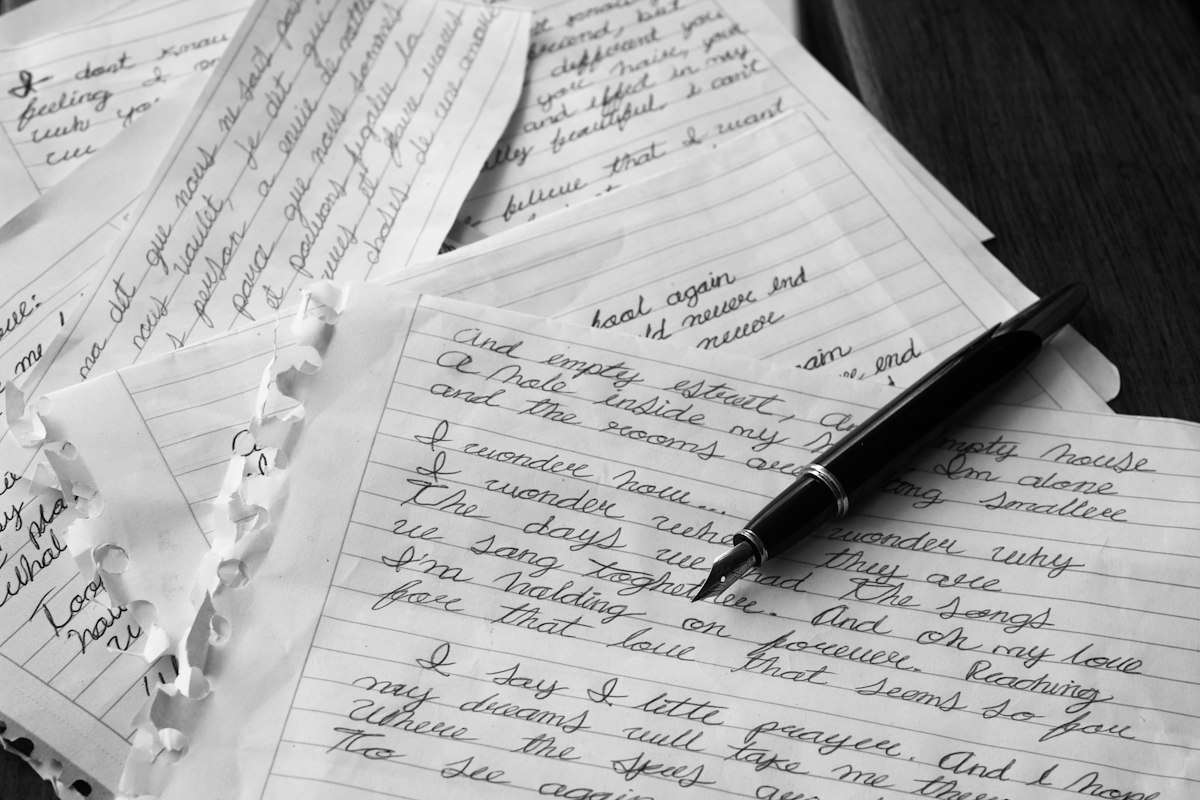
A commonplace book is a notebook for keeping things you did not write. Lines from books. A sentence overheard on a train. A recipe from a grandmother, a definition you looked up, a paragraph from a letter, a fact that changed how you saw something.
The name comes from the Latin locus communis, a "common place" — a general topic or theme under which useful material could be gathered. For several centuries, keeping one was an ordinary part of an educated life. Students were taught to copy passages from their reading under headings like Friendship, Death, or Virtue, so that the best of what they read would be ready to hand when they needed it.
Today, the form is much looser. A commonplace book can be a scholarly archive, a scrapbook of quotations, or something closer to a diary of your reading life. What all versions share is the act of choosing a line, copying it out, and keeping it.
How It Differs from a Journal
A journal is mostly your own words about your own life. A commonplace book is mostly other people's words, gathered by you.
The two overlap more than they seem to. What you choose to copy says a great deal about what you are thinking about. Reading back through a year of commonplace entries can feel surprisingly like reading a diary. You can see what you were worried about, what you were hoping for, and what kind of language you were hungry for at the time.
Some people keep the two in one notebook, with copied passages mixed among their own entries. Others prefer a separate book so the collection stays easy to browse. Either works. If you already keep a journal and want to try this without starting a new notebook, the back pages of your current journal are a reasonable place to begin.
Why Keep One
The plainest reason is memory. You read something that moves you, and two weeks later you cannot remember where it was or how it went. A commonplace book means you do not lose it.
There are quieter reasons as well:
- Copying slows your reading. Writing a sentence out by hand makes you notice its rhythm and structure in a way that skimming never does.
- It gives you a personal anthology. Over time, the book becomes a collection no one else could have assembled, because no one else has read exactly what you have read.
- It feeds your own writing. Many writers keep commonplace books for this reason. A good sentence copied out is a small lesson in how sentences work.
- It is a gentle practice. On days when you have nothing to say, you can still copy something. The habit survives low periods better than most kinds of journaling.
What You Need
A notebook and a pen. That is all.
A few things are worth considering when you choose the notebook:
Size. You will probably carry it, or at least keep it near where you read. Something between A6 and A5 suits most people.
Paper. Lined or dot grid paper makes it easier to copy longer passages neatly. Plain paper suits people who also want to paste in clippings or sketch.
Durability. A commonplace book is often kept for years and reread many times. A sturdy cover and a binding that lies flat will serve you better than a pretty notebook that falls apart.
Numbered pages. If you plan to keep an index, numbered pages save time. If your notebook does not have them, number the pages yourself before you begin, or as you go.
Some people keep their commonplace book digitally, in a notes app or a text file. This has obvious advantages: search, tags, no limit on length. It loses the slowing effect of handwriting, which for many people is the point. You might try paper first and see whether you miss the search bar.
What to Collect
Anything you want to keep. That is the honest answer, and it is worth taking seriously. The commonplace books that last are the ones where the owner did not filter too strictly at the start.
Some common categories:
- Lines from books. The core of most commonplace books. A sentence, a paragraph, occasionally a page.
- Poems or parts of poems. Short poems copied out whole, or a few lines from a longer one.
- Things people said. A friend's offhand remark, a line from a teacher, a phrase a child invented.
- Facts and ideas. Something you learned that you want to remember, written in your own words with a note on where it came from.
- Words. Unfamiliar words and their definitions, or familiar words used in an unfamiliar way.
- Lines from films, songs, talks, and podcasts. Write down the source and, where it matters, the timestamp.
- Small practical knowledge. A way of folding a fitted sheet. A rule of thumb for bread. The name of a plant you keep forgetting.
Keep entries short. A commonplace book is not the place to copy whole chapters. One strong line usually holds more than a page of context, and brevity makes the book easier to reread. If you want to keep a longer passage for private study, copying a few hundred words is fine. The book is for you, not for publication.
How to Make an Entry
Every entry needs two things: the passage itself and where it came from.
The passage. Copy it exactly. Keep the original punctuation and spelling. If you leave something out, mark the gap with an ellipsis so you know later that the passage was trimmed.
The source. At minimum, the author and title. If you can, add the page number, the date, or where you were when you read it. It feels fussy in the moment. It is invaluable two years later when you want to find the passage again or quote it properly.
Many people add a third element: a line of their own. Why this passage. What it reminded you of. Whether you agree with it. This is where the commonplace book starts to become a record of your thinking rather than a list of quotations. You do not need to write a response every time. Even a single word beside an entry — "yes," "not sure," "Mum" — gives it a context you will be glad of later.
A simple layout for each entry:
- The date, in the margin.
- The passage, copied out.
- The source, on its own line beneath.
- Your note, if you have one, set slightly apart.
Organizing the Book
There are three common approaches. All of them work. The right one depends on how you expect to use the book.
Chronological. You simply write each entry on the next available page. This is the easiest method and the one most people start with. The book becomes a timeline of your reading. The disadvantage is that finding a particular passage later can take a while.
By heading. You divide the notebook in advance into sections — Love, Work, Time, Nature, Craft, Grief, Humor, whatever suits you — and copy each passage into the section where it fits. This is closer to the traditional method. It makes browsing by theme easy. It also asks you to guess how much space each section needs, and you will usually guess wrong.
Chronological with an index. You write entries in order, but you keep an index at the back of the book listing themes and the pages where they appear. This combines the ease of the first method with the browsability of the second. It is the approach most long-term keepers settle on.
The philosopher John Locke published a method for indexing commonplace books in the early eighteenth century, filing each heading under its first letter and first vowel so that a single page at the front could index the whole notebook. You do not need anything so ingenious. A few pages at the back, with headings in alphabetical order and page numbers beside them, will do the job. Our guide to indexing your journal covers the mechanics in more detail.
Making It a Habit
A commonplace book grows at the speed of your reading. If you read a little every day, the book will fill steadily. If you read in bursts, it will fill in bursts. Both are fine.
A few things make the practice easier to keep up:
- Mark as you read, copy later. Use a pencil, sticky flags, or a slip of paper. Stopping to copy every line breaks the flow of reading. Copying a session's marks at the end is often more pleasant.
- Keep the book near your reading chair. The same principle applies here as to any journal. If the notebook is out of reach, the entries will not get made.
- Carry something for the lines you hear. Many of the best entries come from conversations and overheard moments. A phone note works as a holding place until you can copy it into the book.
- Do not wait for profound lines. A sentence you liked for its sound alone belongs in the book as much as one that changed your life.
Rereading What You Have Kept
A commonplace book is most useful when you return to it. The first few months are about building the collection. After that, rereading becomes part of the practice.
Some ways to come back to your book:
- Open it at random when you need something to think about. This is the oldest use of a commonplace book and still one of the best.
- Reread one heading at a time. Read everything you have kept on a single theme and notice how the passages talk to each other.
- Write from it. Choose a passage and write a journal entry in response. Copied lines make excellent prompts because you already know they matter to you. If you enjoy working directly with other people's words, blackout poetry is another way to turn found language into something of your own.
- Look for patterns. At the end of a year, skim the whole book. What did you keep returning to? Which authors appear again and again? The answers are often a small surprise.
A Note on Honesty and Attribution
A commonplace book is a private collection, and copying passages for your own reading and reflection is one of the oldest habits of readers. Keeping careful notes on where each passage came from protects you later, especially if you write.
It is easy, years on, to come across a beautiful sentence in your own handwriting and forget that you did not write it. Clear attribution prevents that. If you ever use a passage from your book in something you share, credit it, and keep quotations short.
Starting Today
You do not need to plan the whole system before you begin. Choose a notebook. Number the first few pages. Write the date, and copy out one line you have liked recently — something from the book on your nightstand, a message from a friend, a sentence you have been carrying around in your head.
Write the source beneath it. Then close the book.
That is a commonplace book. The rest is time, and reading, and a habit of noticing the lines that seem to have been written with you in mind.
Was this article helpful?
Thanks for your feedback!


