
List Journaling: Why Writing in Lists Works When Sentences Will Not Come
Some days a paragraph is more than you have. A list still counts, and over time it records things prose tends to miss.
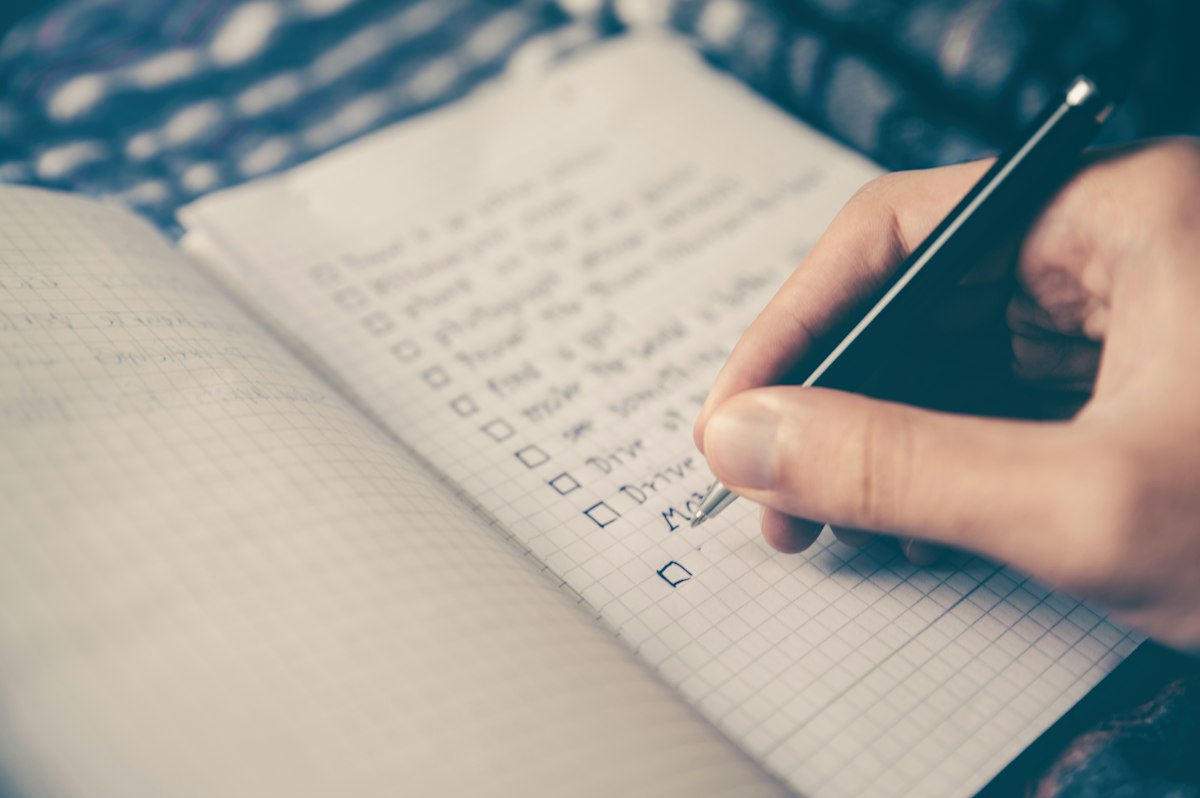
Most people who abandon journaling do not abandon it because they ran out of things to say. They abandon it because of the paragraph.
The paragraph is the hidden entry requirement of the whole practice. Somewhere along the way, journaling came to mean prose — full sentences, arranged into blocks, with some connective tissue between them. So you sit down with a notebook, feel the weight of having to compose something, and close it again.
List journaling removes that requirement. You write down items, one under the other, and stop. No introduction, no transitions, no ending. It looks less like a diary and more like a shopping list, and it still works.
What List Journaling Is
The method is exactly what the name suggests. Instead of writing an entry about your day, you make a list about it.
Five things that happened. Three things that are bothering you. Everything you ate. What you noticed on the walk. People you thought about. Things you are avoiding. Small pleasures. Open questions.
Each item is a fragment — a few words, sometimes one. You do not explain them. You do not justify why they made the list. The page ends when the list ends.
That is the whole technique. What makes it worth doing is not complexity but what it removes.
Why the Format Lowers the Barrier
Prose asks for two things at once: knowing what you think, and arranging it. On a tired evening, the second requirement is often what stops you, even when you have plenty to say.
A list drops the arranging. You do not need a first sentence, which is the sentence that stops most people. You do not need the items to relate to each other. You do not need to finish.
It also lowers the stakes on accuracy. Writing "felt strange about the meeting" in a list commits you to nothing. Writing a paragraph about it means working out what the strangeness was, which is more work than you may have available. The list lets you note the thing without resolving it, and noting is often enough to be worth doing.
There is a practical point too. A list of five items takes ninety seconds. A practice that takes ninety seconds survives weeks that a twenty-minute practice does not.
How It Differs From Bullet Journaling and Brain Dumps
Three methods use short lines on a page, and they are frequently confused with each other.
Bullet journaling is an organizational system. Its lists are tasks, events, and notes, structured with symbols and migrated forward month to month. Its purpose is to run your life. It happens to look like list journaling, but it is answering a different question — what needs doing rather than what is happening in you.
A brain dump is a fast, one-directional unloading. You write everything in your head onto a page to get it out of the way, usually because you cannot focus or cannot sleep. It is a relief valve, and the page often has no value afterward.
List journaling sits between them. It is not organizing your obligations and it is not emptying your head under pressure. It is a record, kept in the smallest usable format, that you might actually want to read later.
The difference shows up most clearly in what you write. A bullet journal says "call the dentist." A brain dump says that too, buried among forty other things. A list journal says "still have not called the dentist, three weeks now" — and after two months of that item reappearing, you have learned something about yourself that neither of the other methods would have shown you.
Lists Worth Keeping
Some lists produce more than others. These tend to earn their place.
What happened today. Five to ten items, factual, in no order. This is the closest thing to a conventional diary and the easiest to keep. Include the small things. The record is more interesting later when it is not only the significant events.
What I noticed. Sensory and observational rather than eventful. The color of the sky at four o'clock. The way someone said your name. Lists like this train attention, and they read remarkably well after a year.
What is on my mind. Concerns, unresolved things, background hum. Written as fragments rather than explained. Useful precisely because the repeats become visible.
What I am avoiding. Uncomfortable and short. Most people find three or four items, and most people find the same items week after week until something changes.
Small good things. Not a gratitude exercise in the formal sense, just a note of what was actually pleasant. The coffee. Ten minutes of sun. A message from someone.
Open questions. Things you do not know yet — about a decision, a relationship, a piece of work. Questions age interestingly. Some answer themselves quietly; others turn out to have been the real matter all along.
Firsts and lasts. Anything you did for the first time, or possibly the last. This one is worth keeping for years rather than weeks.
You do not need all of these. One or two, kept consistently, will do more than a rotation of seven.
How to Actually Do It
Pick a time you are already stopping — after the last meal, before bed, on the commute home.
Choose one list type for the day. Deciding between seven options is its own small obstacle, so most people settle on one default list and only vary it when something specific calls for it.
Write items until they stop coming. Do not aim for a number. Three honest items beat ten padded ones.
Keep the items short but specific. "Work was hard" tells you almost nothing in six months. "Third day of the same argument about the launch date" tells you a great deal. Specificity, not length, is what makes an entry survive.
Do not tidy. Lists do not need to be alphabetized, prioritized, or grouped. The order things occurred to you is itself a kind of information.
Date every list. This is the one piece of structure that matters, because the value of the method is almost entirely in the accumulation.
What Lists Show You That Prose Does Not
Written entries are interpretive. By the time you have composed a paragraph about your week, you have already decided what the week meant, and the paragraph tends to argue for that reading.
Lists interpret less. They put items side by side without explaining the relationship, which leaves the pattern for you to find later.
Read three months of lists in one sitting and things surface that no single entry contained. The same name appears in your "on my mind" list forty times. Every genuinely good day includes something outdoors. Your avoidance list is dominated by one category of task, and it is not the one you would have named. The weeks you described at the time as fine are visibly thinner on the page than the weeks you described as difficult.
This is the real argument for the method. A list is a poor essay and an excellent dataset.
Where the Method Falls Short
Lists are not good at processing.
When something is genuinely painful, or complicated, or requires you to work out what you feel rather than note that you feel it, a fragment will not do the work. Grief, a difficult decision, the aftermath of a conflict — these need prose, or need to be talked through with someone, and a list can become a way of gesturing at the subject while keeping a safe distance from it.
It is worth noticing when you are using the format that way. If the same item has appeared in your list for two months, that item probably wants a page, not another line.
Lists are also thin on emotional nuance. They record that something happened, rarely what it was like. Some people solve this by allowing one item per list to expand into a few sentences — the format holds fine, and the entry gains something.
And a general limit, worth repeating: journaling in any format is not therapy. It is good at noticing and organizing, and it is not a substitute for support when something is genuinely heavy.
Using It Alongside Other Writing
Most people who keep list journals do not keep only list journals. The method works well as the default that keeps the practice alive on ordinary days, with longer writing available when a day actually calls for it.
That combination tends to be more durable than committing to prose every day. The list is small enough that you rarely skip it, and having the notebook open for ninety seconds is frequently what turns into fifteen minutes of writing you did not plan.
If you have stopped journaling more than once, this is a reasonable place to restart. Not with a resolution to write properly, but with five items and a date.
Tonight
Open a page. Write today's date. Write five things that happened today, in whatever order they arrive, with no explanation.
Close the notebook.
That is a complete entry. Do it enough times and you will have something that reads, months from now, less like a diary and more like a set of honest notes on a life as it was actually being lived.
Was this article helpful?
Thanks for your feedback!


