
Journaling with Music: How to Let Sound Shape Your Writing
Music changes what comes out of you on the page. A practical look at how to use sound as a frame for your writing without letting it take the writing over.
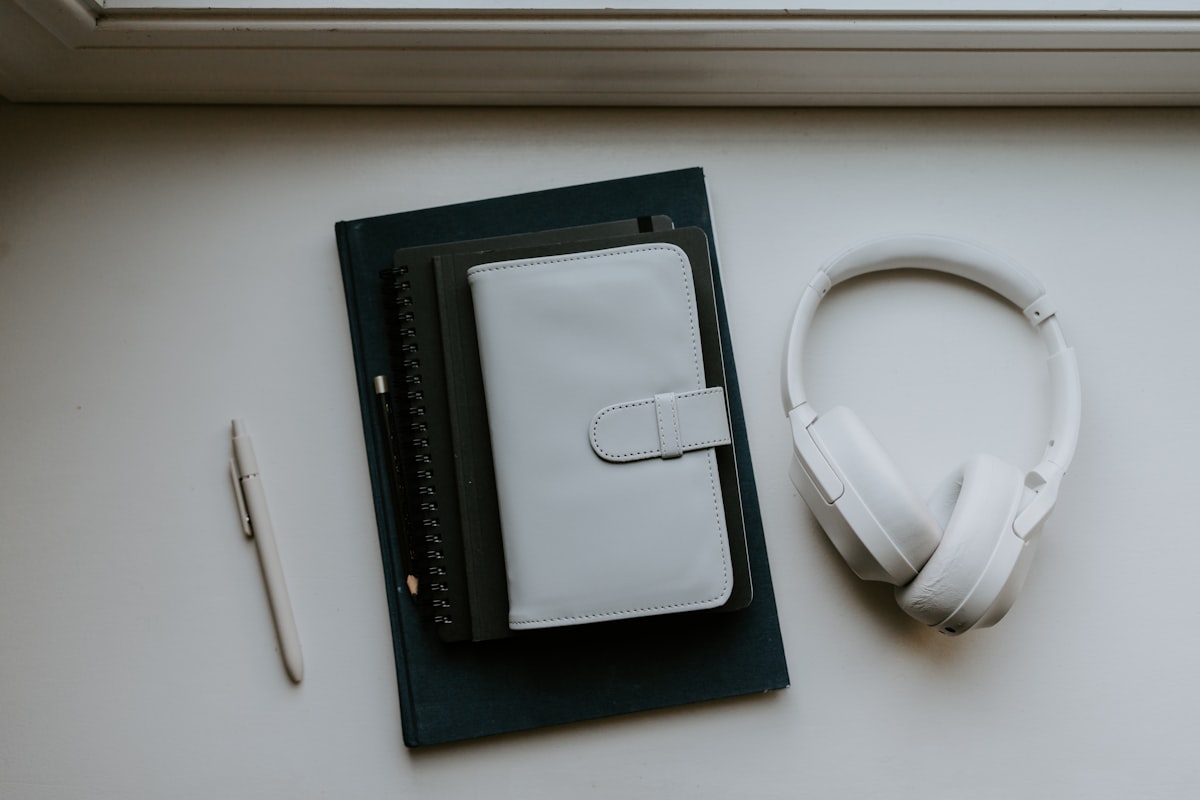
Most journaling advice assumes silence. You sit down with a notebook, you close the door, and you write whatever surfaces. Sound is something to be eliminated, not invited in.
But for many people, silence is not neutral. Silence amplifies the inner noise it was supposed to dissolve. You sit down to write and your mind narrates the writing instead of producing it. You start a sentence and stop. The room feels too quiet for honesty.
Music can do something useful here. It changes the texture of the room and, with it, the texture of what comes out of you on the page. The right piece of music does not distract you from writing. It clears a particular space in which writing becomes possible.
This article is about how to use music deliberately as part of a writing practice — what it tends to do, how to choose it, and when to leave it off entirely.
What Music Actually Does to Your Writing
Music does not improve writing on its own. It changes the conditions under which writing happens, and you bring something different to the page as a result.
The clearest thing it does is move your attention away from your own monitoring voice. When the room is silent, the loudest sound is the inner critic. With music in the background, that voice has to share the channel. It gets quieter without you needing to fight it. Many people find they write more freely as a result, especially in the first few minutes.
Music also affects the emotional register you write in. Slow, instrumental pieces invite slower sentences and longer thoughts. Faster, repetitive pieces produce a different kind of writing — more associative, less linear, sometimes more honest because the rational mind is occupied keeping time. Sad music opens emotional material. Familiar music quiets it. The shape of the writing follows the shape of the sound.
It also marks time without you having to. A piece of music has a beginning and an end. If you put on a single track or a short album, the writing session has a natural shape. You do not have to keep checking the clock. The music ends when the session ends.
Finally, music creates a small ritual. Pressing play before you write becomes the signal that this is the part of the day where you write. The mind learns the cue quickly. After a few weeks, the opening notes of your usual track can produce a settling in your body that you did not have to consciously summon.
When Music Helps the Practice
There are particular situations where adding music tends to make writing more accessible rather than less.
The first is when the room is too quiet to think in. Some homes, some libraries, some empty offices have a kind of charged silence that pulls your attention outward rather than inward. A piece of music underneath dissolves that quality and gives you something neutral to write against.
The second is when you are blocked by your own monitoring. You sit down to write, you know the page is private, and yet the inner editor is so loud that nothing reaches the page intact. Music with no words, or words in a language you do not speak, fills enough of the channel that the editor has to step aside.
The third is when you are trying to write into a particular emotional register that does not come easily on demand. If you are writing about grief and the day has been ordinary, you may need a piece of music that opens that particular door. The music is doing the emotional translation that your mood would not provide.
The fourth is when you have only a small window and you need to drop into the writing fast. The cue of a familiar piece of music shortens the warm-up. The first few notes do work that would otherwise take five minutes of staring at the page.
The fifth is when you are using writing as a way to feel something specific, rather than to think about something specific. Music shapes feeling faster than thought does. If the writing is about being present in your body or accessing a mood, music is often the right doorway.
When Music Gets in the Way
Music does not help every kind of writing, and sometimes it actively interferes.
If the writing requires precision — making a real decision, working out an argument, writing something that needs to hold together logically — music with strong emotional pull can drag the writing off course. You start writing about your work problem and end up writing about your childhood because the track went somewhere unexpected. This is sometimes what you needed, and sometimes a detour.
If you are trying to hear your own voice clearly — figure out what you actually think about a situation, separate your view from the views you have absorbed from other people — music can drown the very signal you are trying to amplify. Silence here is doing real work, even if it is uncomfortable.
If the music is too engaging, you will write about it instead of about what you sat down to write about. This usually means the music is too new, too good, or too lyrical. Save it for listening; use something else for the writing background.
If you find yourself reaching for music every single time, it is worth asking whether the music is helping or whether the silence is what you are avoiding. Sometimes the resistance is the writing. The discomfort you would feel sitting in silence with a page is often where the real material lives.
Choosing What to Listen To
The right music for journaling is rarely the music you would put on for any other reason. It does a specific job and the choices that serve that job are unusual.
Instrumental music almost always works better than music with lyrics. Lyrics compete with the words coming out of you. Even lyrics in a language you do not speak occupy more of the language-processing channel than purely instrumental sound. If you want to write to vocal music, choose pieces where the voice is treated like an instrument — wordless, layered, or in a language remote from your daily life.
Familiar music tends to work better than new music. Something you have heard many times sits in the background; something new pulls your attention. A favorite ambient album from years ago will support your writing in a way that the latest release on a friend's recommendation will not. Save the new for active listening.
Pace matters. Slow, sustained music produces slower, more thoughtful writing. Faster, repetitive music produces freer, more associative writing. Neither is better; they are tools for different days. Notice which kind your particular writing wants on a particular morning, rather than choosing once and sticking to it forever.
Some specific genres tend to be reliable for journaling. Ambient music — long, drifting, without strong melodic hooks — is the most common choice because it adds atmosphere without competing for attention. Solo piano, particularly minimalist or contemplative work, tends to suit reflective writing. Soft electronic music, the kind with a steady pulse and few changes, works well for freewriting and brain dumps. Classical adagios suit emotional writing. Lo-fi instrumental hip-hop has become standard for study and quietly supports journaling the same way. Film scores designed to underscore emotion rather than to be noticed work surprisingly well.
What does not tend to work, for most people: music you would dance to, music with strong narrative lyrics, music tied to specific memories that will pull you off the page, anything you put on partly hoping someone will hear it. The test is whether the music recedes once you start writing. If you keep coming back to it, change it.
Building a Practice Around It
If you want music to become a real part of your journaling practice rather than something you reach for randomly, a small amount of structure helps.
Build a short list of pieces or playlists that have worked for you and treat them as the music you write to. Two or three is usually enough. The point is not variety; the point is that the same opening notes can become a reliable cue. Some people use a single album for months and find that it deepens rather than wears thin, because the writing happens in conversation with the sound.
Match the music to the kind of writing. Reflective evening entries call for slower, more sustained pieces. Morning pages or freewriting tolerate something with more momentum. Difficult emotional writing benefits from music that does not try to fix the emotion but gives it somewhere to sit. Writing about a creative project may want something more textured. Over time, you will know which of your usual choices suits which kind of writing.
Volume matters more than you would expect. Music for journaling should be low enough that you have to listen for it slightly. If it is loud enough to drive your writing, it is too loud. The role is background; the writing stays in the foreground.
Consider using headphones if your environment is noisy. Headphones with simple instrumental music create a portable version of a quiet room. They are particularly useful in shared homes, on transit, in cafes, or in offices where you can write but not control the sound around you.
You can also use music to mark sections of a writing session. One track for a brain dump at the start, a slower piece for the reflective writing that follows, a final track to close the entry. The internal structure of the session becomes audible.
A Few Specific Pairings to Try
These are not prescriptions. They are starting points if you have never written to music before and do not know where to begin.
For morning pages or stream of consciousness writing: ambient music with a steady, unobtrusive pulse. Long pieces with few changes work well — you want the music to support the flow rather than direct it.
For evening reflection: slow piano or string adagios. Single instruments rather than full ensembles. The space in the music gives space to the writing.
For difficult emotional material: instrumental music that holds emotion without prescribing it. Modern classical, slow film scores, certain kinds of choral work in unfamiliar languages. Music that does not flinch but also does not push.
For creative or generative writing: textured electronic music, jazz instrumentals, or layered ambient pieces. Something with enough internal life that your writing has surfaces to bounce off.
For brain dumps and clearing the head: steady, repetitive music with a clear pulse. Lo-fi instrumental hip-hop, certain forms of techno played quietly, minimalist piano with rhythmic figures. The repetition occupies the surface mind and lets the deeper material reach the page.
For travel or location-based writing: music that has nothing to do with where you are. The contrast keeps the writing in conversation with the place rather than absorbed by it.
Silence Is Still a Practice
It is worth saying clearly: silence is not the absence of practice. Silence is a particular kind of writing environment, and learning to write in it is part of what most journaling practices are quietly teaching you. Music can help when silence is the problem, but it should not become the only condition under which you can write.
A useful test: every so often, try a writing session in silence after weeks of writing to music. Notice what changes. If you cannot write at all without music, the music has stopped being a tool and started being a requirement. If you can write in silence but prefer music for certain kinds of work, the relationship is healthy.
Most longtime journalers move back and forth between the two. Some entries want sound underneath them; others want the bare room. The skill is knowing which is which on any particular day, and being willing to set the music aside when the writing wants the silence.
A Quieter Layer of the Practice
Music is one of the smaller variables in journaling, but it changes the experience more than its smallness suggests. The same person, with the same notebook, at the same time of day, will write differently depending on what is playing in the background — or whether anything is playing at all.
The point is not to find the perfect playlist. The point is to notice that the conditions around the page matter, and that you can adjust them deliberately rather than leaving them to whatever the room happens to be doing.
If you have been struggling to settle into writing, a piece of music at low volume may be the small adjustment that makes the practice accessible again. If you have grown so attached to music that you cannot write without it, leaving it off for a week may be the same kind of useful intervention in the other direction.
Either way, you are paying attention to what helps the writing happen. That attention is itself part of the practice.
Was this article helpful?
Thanks for your feedback!


