
Journaling with Kids: How to Start a Family Writing Practice
A gentle, practical look at journaling with children — how to start, what to expect at different ages, and how to keep it playful enough that they actually want to.
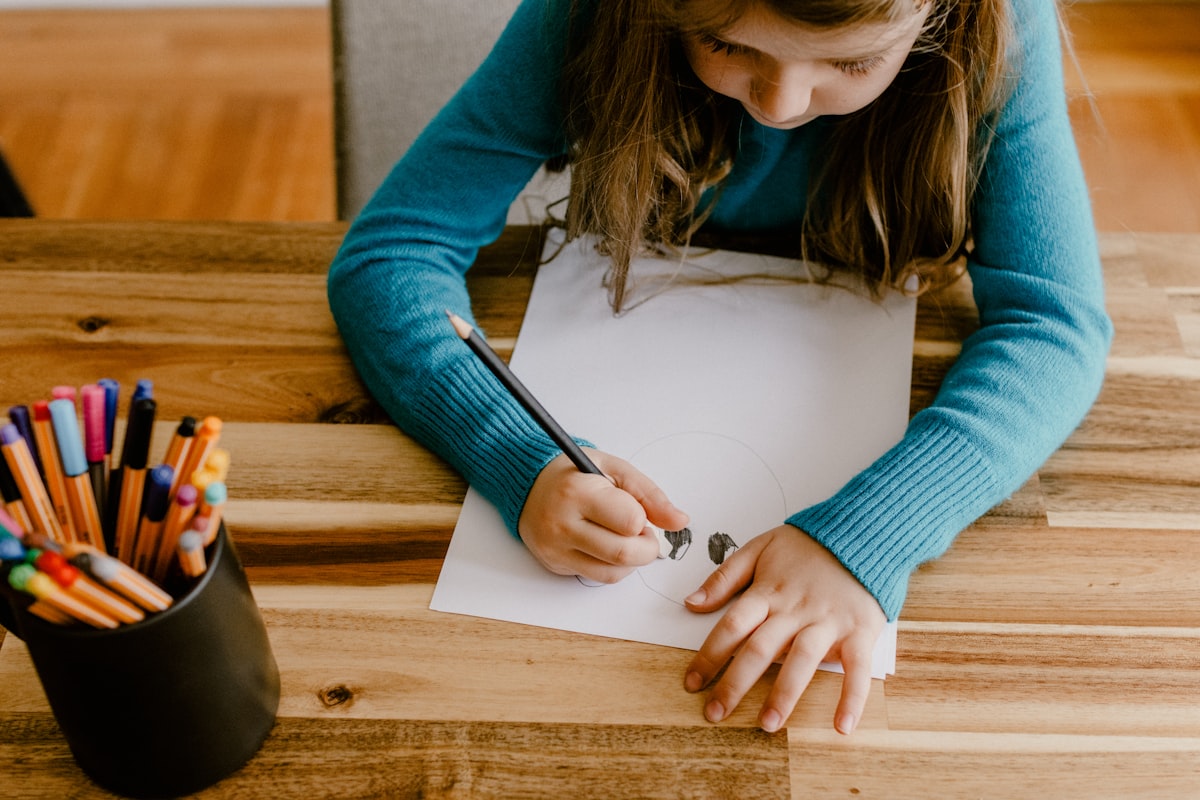
There is a particular hope that comes with wanting your child to journal. You know what the practice has given you, or you have read what it can offer — a way to slow down, to notice feelings, to think on paper — and you would like your child to have it too.
That hope is worth having. But it is also the thing most likely to get in the way. A child can sense when writing has been assigned to them for their own good, and nothing kills the appeal of a notebook faster than the feeling that it is homework in disguise.
So the real question is not how to make a child journal. It is how to open a door and make the room behind it inviting enough that they walk in on their own. This is a look at how to do that, without the pressure that usually undoes it.
Start with Why It Might Help
Before the how, it is worth being honest about what journaling can actually offer a child, so your expectations stay realistic.
Writing or drawing about a day gives children a small, low-stakes way to name what happened to them and how they felt about it. That naming is genuinely useful. A child who can put "I felt left out at lunch" onto a page has taken a step toward understanding it, and understanding a feeling is the beginning of being able to manage it.
A journal also gives a child something rare — a space that is entirely theirs, with no correct answer and no one grading it. For a child whose days are full of instruction and evaluation, that alone has value.
What journaling will not do is make a child more disciplined, better at spelling, or calmer on command. If you approach it as a tool to improve them, both you and the child will feel the strain. Approach it as a small pleasure they get to have, and it has a chance of lasting.
Lower the Bar Until It Is Almost on the Floor
The single most useful thing you can do is redefine what counts as journaling. For an adult, journaling usually means writing. For a child, it should mean almost anything done in a notebook.
A drawing is a journal entry. A single word is a journal entry. A scribble of the color that matches their mood is a journal entry. A sticker, a pressed leaf, a list of three animals — all of it counts. The notebook is a container for whatever a child wants to put in it, and the more generous that definition is, the more likely they are to keep opening it.
This matters most for younger children, who often cannot yet write fluently. If journaling requires forming sentences, you have locked out a five-year-old before they begin. If it only requires making a mark on a page, everyone is welcome.
Resist correcting. A misspelled word, a backward letter, a drawing that does not look like the thing it is meant to be — none of that matters here. The moment a child feels their journal will be assessed, it stops being a safe place and becomes another test.
What to Expect at Different Ages
Children relate to a journal very differently depending on where they are, and matching your approach to their age saves a lot of frustration.
Roughly ages three to five. This is almost entirely drawing and dictation. A young child can scribble a picture of their day and tell you about it while you write a sentence underneath in their words. The talking is the real practice; the notebook simply gives it a home. Keep sessions to a few minutes and expect them to be about pictures far more than words.
Roughly ages six to nine. Early writing arrives, and with it the ability to add a line or two to a drawing. Prompts help enormously at this age, because a blank page is intimidating and a small question is not. "What made you laugh today?" is far easier to answer than "write about your day." Expect entries to stay short, concrete, and often gleefully mundane.
Roughly ages ten to twelve. Some children in this range begin to want privacy, and this is a good and healthy development. A journal that a parent reads is not a private space, and around this age the private version becomes more valuable than the shared one. Your role shifts from participating to protecting — providing the notebook, the time, and a firm assurance that you will not read it unless invited.
Teenagers. By now journaling is entirely theirs, if they want it at all. The most useful thing a parent can do is model it, keep supplies available, and stay out of the way. A teenager who sees a parent write in a notebook without ceremony is more likely to try it than one who is told they should.
These ages are rough. Children vary enormously, and a quiet eight-year-old may want the privacy a boisterous eleven-year-old does not. Follow the child in front of you.
Do It Alongside Them
Children learn far more from what you do than from what you tell them to do. If you would like journaling to feel normal and appealing, the most effective move is to keep a notebook yourself, visibly, without making a lesson of it.
Sit at the table with your own journal while they draw in theirs. Write for a few minutes. Let them see that this is simply something people in your house do, like reading or cooking, rather than an activity invented for their improvement.
A shared session can be a quiet, companionable few minutes rather than an instruction. You do not need to talk the whole time. Two people writing and drawing side by side, occasionally showing each other a page if they want to, is a gentle and repeatable ritual that asks very little of anyone.
If a child wants to share what they made, receive it with real interest and no correction. If they do not, leave it be. The freedom to keep it private is part of what makes the notebook theirs.
Prompts That Actually Land
Blank pages stall children even more than they stall adults. A small, specific, slightly playful question is usually all it takes to get a child started. General questions produce general shrugs; concrete ones produce answers.
A few that tend to work:
- What was the best part of today, and the worst part?
- If today were an animal, which animal would it be?
- Draw something that made you happy today.
- What is something you wondered about today?
- What made you laugh?
- If you could change one thing about today, what would it be?
- What are three things you can see from where you are sitting right now?
Notice that most of these can be answered with a drawing as easily as with words, and that none of them demand a feeling be examined. Children often reach feelings sideways, through a story or a picture, rather than head-on. Let the sideways route stay open.
Keep a small list of prompts near the notebooks, and let the child pick one when they do not know where to start. Choice helps. A prompt offered is an invitation; a prompt assigned is a task.
Keep It Free of Pressure
Everything about a family journaling practice depends on it staying voluntary. The instant it becomes a required daily chore, it joins the long list of things children resist on principle.
Do not enforce a streak. A child who journals twice a week because they want to is doing better than one who journals daily because they must and resents every minute. Missed days mean nothing. The practice is not a habit to be drilled; it is an option to be kept available.
Do not judge the content. A journal full of nothing but drawings of the same cartoon character is a perfectly good journal for a seven-year-old. Depth is not the goal. Comfort with the page is.
Do not read a private journal without permission. Once a child has been told a notebook is theirs, that promise is load-bearing. Reading it, even from love and worry, teaches them that the private space was never really private, and the honesty you hoped the journal would nurture goes quiet.
If a child loses interest for a while, let them. Interest in journaling comes and goes across childhood, and a notebook set aside for a few months is not a failure. Leave the supplies where they can find them, keep writing in your own, and the door stays open for when they want to return.
A Word on Difficult Feelings
Sometimes a child's journal will surface something heavier — a fear, a sadness, a worry they have not spoken aloud. If a child chooses to share such an entry with you, treat it as the trust it is. Listen more than you respond. Resist the urge to fix it immediately or to turn it into a lesson.
A journal can help a child sit with a feeling and begin to name it, which is a real and worthwhile thing. But it is not a substitute for the support a struggling child needs from the adults around them. If your child's writing or behavior points to something you are genuinely worried about, that is a signal to talk to them directly, and if needed to seek help from a professional. The notebook is a companion to that care, never a replacement for it.
The Long View
The aim of journaling with children is not to produce a diligent daily writer. It is to hand a child a small, private, judgment-free place to be themselves, and to let them discover on their own terms what it is good for.
Some children take to it immediately and keep notebooks for years. Others draw in one for a season and drift away, and return to writing much later in life when they need it. Both are fine. You are not building a habit that must not break. You are simply showing a child that a blank page can be a friendly place, and trusting that the knowledge will be there when they want it.
Keep the bar low, keep the pressure off, keep a notebook of your own on the table. Then let the child decide what to do with the door you have left open.
Was this article helpful?
Thanks for your feedback!


