
Journal Privacy and Safety: How to Keep Your Writing Truly Private
A practical look at keeping your journal genuinely private — from where you hide a paper notebook to how you secure a digital one. The smaller the chance of being read, the more honestly you can write.
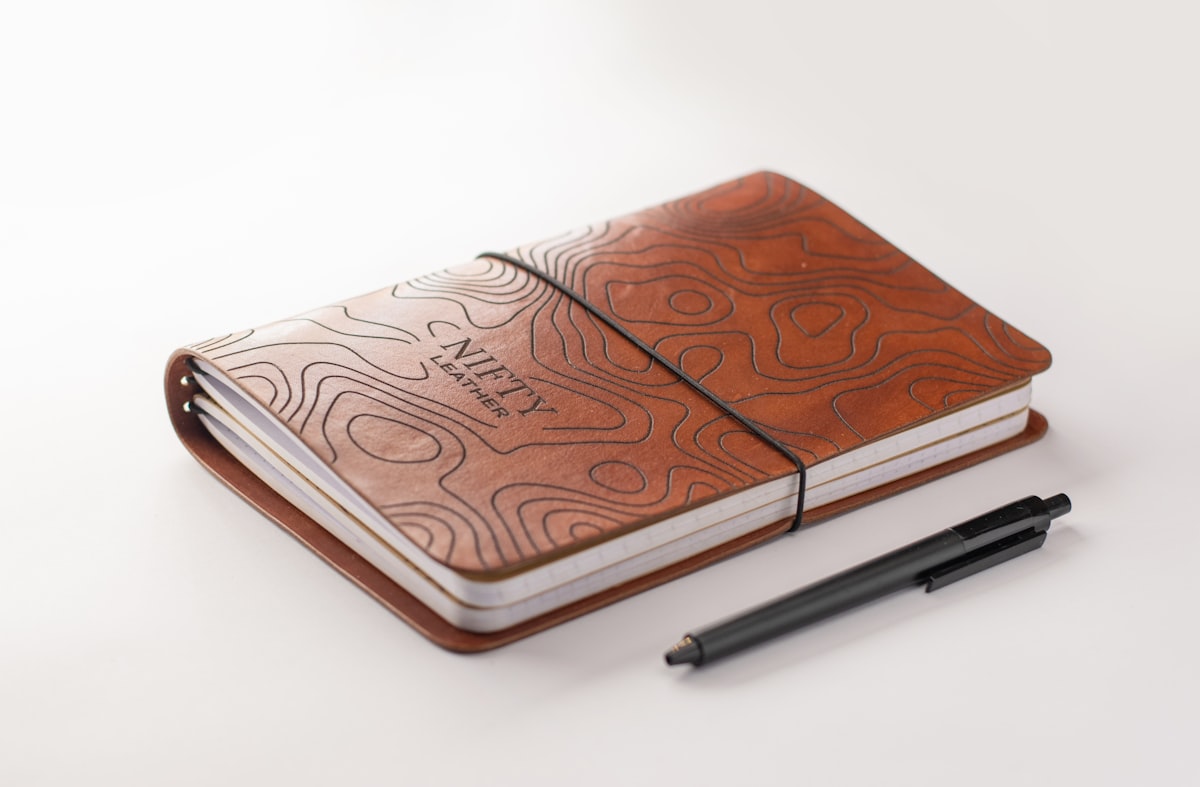
The question of privacy is not a small one. A journal is most useful when you can write in it without editing yourself, and you cannot really do that if part of your attention is on the chance that someone else might read it later. The honesty of the page depends on the certainty that the page is yours alone.
This matters for practical reasons. People who share a home, share a phone, share a backup account, or live with someone they do not fully trust often write a thinner version of themselves into the journal. They cannot say what they actually think about a parent, a partner, a colleague — not because they do not know it, but because the writing might be discovered. The journal becomes a polite document. The harder material stays inside.
A few small habits make the difference between a journal that you treat as truly private and one you secretly suspect could be read. None of this is complicated. Most of it is just thinking ahead.
Why Privacy Matters for the Writing Itself
If you are not sure your journal is private, you write differently. You may not notice it happening, but the part of you that is alert to being seen will quietly adjust the words. You soften criticisms. You leave out the embarrassing thought. You write around a difficult truth instead of through it.
Over time, this changes what the journal can do for you. A diary that hides things from a possible reader also hides them from you. The point of writing was to see clearly. The hedging gets in the way.
The reverse is also true. When you trust that the journal is private — really private, not just probably private — the writing relaxes. You stop performing. You can put down the ugly sentence and the unflattering thought, and you discover that being honest with yourself is much less frightening when no one else is in the room.
The work of privacy is not paranoia. It is removing the friction between what you want to write and what you actually write.
Paper Journals: Where the Notebook Lives
A paper notebook is easy to read if someone finds it. There is no password. The protection is entirely about where you keep it.
The first decision is location. Some people keep the notebook in a desk drawer. Others keep it in a bag. Some choose a place that is not obvious — a shelf of books where the spine looks ordinary, a box of papers no one else opens, a drawer that does not invite curiosity. None of these is perfectly safe. They are all, however, better than leaving the notebook open on a desk.
If you live with someone whose privacy practices you cannot count on, the question is more serious. A locked drawer or a small lockbox does real work here. So does keeping the notebook somewhere they have no reason to look. Plain covers attract less attention than ones marked Journal or Diary. The unremarkable notebook is the safer notebook.
If you travel, think about where the journal goes during the trip. Hotel rooms are not private. If the notebook contains material you would not want anyone to read, carry it with you rather than leaving it in a room, or leave it at home.
Many people destroy old journals at intervals. This is a personal decision. Some find it freeing — the writing did its work and now it can go. Others want a record. There is no right answer, but the question is worth thinking about before you have years of notebooks stacked somewhere and no plan for them.
Digital Journals: Where the Risk Actually Lives
A digital journal looks more private than a paper one, but the picture is more complicated than it appears. A notebook can only be read by someone who finds it. A digital file can be read by anyone with access to your account.
The first question is what kind of digital journal you are keeping. A Word document on your laptop. A note in a notes application. A dedicated journaling app. A document in a cloud service like Google Docs or Apple Notes. Each of these has different exposure.
A document on a personal device that no one else uses is reasonably private — assuming the device itself is locked with a password or biometric, and assuming the document is not automatically backed up somewhere shared. A document in a cloud service is private only if the account is private. If you share a household account, or your password has been seen, or the family iPad logs into your iCloud, the journal is not as private as you think.
A few practices worth considering:
- Use a personal account, not a shared one. If you have a household Apple ID or Google account, your journal should not live there. Create a separate account for personal writing if you need to.
- Turn off cloud sync if you do not need it. A journal on a single local device is harder to read by accident than one synchronized to several.
- Use a journaling application that supports a passcode or biometric lock. Many do. The extra layer is worth the small amount of friction.
- Be careful with screenshots and exports. A photograph of a journal page lives in your camera roll, where it may be backed up, shared, or seen by anyone who picks up your phone.
The single most effective practice is to use an app or document that requires a password or biometric to open. Even if someone has your phone, they cannot read the journal without that second step. Most journaling applications now support this. Use the feature.
Passwords and Encryption
If you are storing a journal digitally, the strength of your password matters more than most people assume.
A weak or reused password is not protection. If the password to your journal is also the password to your email, anyone who learns one has the other. Use a unique password for the account that holds your journal, and let a password manager generate and store it. This is now the standard advice for any account that matters, and a private journal qualifies.
If you are writing on a device that supports full-disk encryption — most modern phones and computers do — make sure it is turned on. On Apple devices, this is the default. On Windows, it is called BitLocker. On Android, encryption is also typically on by default for newer phones. Encryption means that if your device is lost or stolen, the contents are not readable without your password. For a journal, that matters.
If you keep journal files in cloud storage, end-to-end encryption is the bar to look for. End-to-end encryption means that even the company providing the service cannot read your files. Several services offer this either by default or as an option. Standard cloud storage, by contrast, is encrypted in transit but readable by the provider, which means it could in theory be exposed by a breach or a subpoena. For most personal journaling, standard storage is fine. For more sensitive material, end-to-end encrypted options exist and are not difficult to set up.
You do not need to become an expert in security to keep a journal private. You need to do a few small things and not undo them by accident.
Writing in Code, or Not
Some people use private shorthand in their journals — initials instead of full names, code words for sensitive topics, abbreviations only they would understand. This can help. It is not a strong protection — a determined reader could often figure out the references — but it does reduce the cost of being read by accident.
The trade-off is honesty. Writing in code can also become a way of hiding things from yourself. If you cannot write a person's name, you may not be writing about them fully either. There is a difference between protecting your privacy and softening the truth.
Most people end up with a light version of this practice. Initials for people. Maybe a vague phrase for a sensitive subject. Nothing elaborate. The journal stays readable to you, while being a little less readable to someone glancing at a single page.
If Someone Reads Your Journal
This sometimes happens. A family member finds the notebook. A partner opens an unlocked app. A roommate reads what was left on a desk. The consequences range from minor to serious, depending on who read it and what was there.
There is no perfect response, but a few things are worth keeping in mind.
You did not do anything wrong by writing honestly in a private space. The breach is theirs, not yours. The instinct to apologize for the contents of a journal that someone read without permission is misplaced. You wrote it for yourself. They were not invited.
You can change what happens next. Move the journal to a more secure location. Switch to a digital format with a lock. Talk about it directly with the person who read it, if that is safe and useful. Stop writing if you cannot make the practice private again, and resume when you can.
If the reading reveals something difficult about the relationship — that the person who read your journal does not respect your privacy — that information is worth taking seriously, even if it is uncomfortable.
The journal itself can be repaired. Some people choose to keep writing in the same notebook, treating the violation as past. Others want a fresh notebook to mark a clear boundary between what was read and what comes next. Both are valid.
When Privacy Is Not Available
For some people, fully private writing is not possible. They live in tight quarters with no door that locks. They share devices. Their movements through a home are watched. The honest version of this article must acknowledge that.
If you are in a situation where your privacy is genuinely at risk — particularly in a relationship where being read could cause harm — the calculation changes. A journal that could be discovered may not be the right tool right now. Short, in-the-moment writing on paper that is then destroyed. Voice notes that are deleted after listening. Writing on a device you use only outside the home, like a work computer or a library terminal. These are imperfect substitutes, but they can carry some of the practice through a period when a notebook of your own is not safe.
If your situation is dangerous, the journal is not the priority. Reaching out for help is. The notebook can wait for the time when it is safe to keep.
A Practice Worth Protecting
The privacy of a journal is what makes the journal what it is. The page is a place where you can say things you would not say out loud — not because they are shameful, but because they need somewhere to be thought through before they are anything else. That space deserves protection.
Most of the protection is simple. Choose where the notebook lives. Lock the app. Use a real password. Do not share the account. Pay attention to where the words could end up if you were not paying attention.
You do not need to be paranoid. You only need to be a little deliberate. A journal you trust is one you can write into honestly, and a journal you can write into honestly is the only kind worth keeping.
Was this article helpful?
Thanks for your feedback!


