How Writing Helps You Process Difficult Emotions
Discover how putting your feelings into words through diary writing can help you understand, process, and move through difficult emotions with greater clarity.

When Words Become Your Anchor
Difficult emotions rarely announce themselves politely. They arrive as a tightness in your chest, a restless mind at 3 a.m., or a heaviness you cannot quite name. Many people reach for distractions—scrolling, busy work, conversations they are not ready to have. Yet there is another path, one that has been used for centuries: writing.
When you put pen to paper or fingers to a keyboard, something shifts. The formless pressure inside begins to take shape. Confusion becomes clearer. Anger finds words. Grief gets witnessed. This is the quiet power of a personal diary—not as a record to be judged or perfected, but as a safe space where your inner world can finally speak.
The Science Behind Writing Through Emotion
Research in psychology and neuroscience has documented what diary writers have long known intuitively: writing about emotional experiences creates measurable change in how we process them.
When you experience a difficult emotion, it activates the emotional centers of your brain, particularly the amygdala. This region responds quickly but does not always help you understand what you are feeling. Writing engages different neural pathways—the prefrontal cortex, which handles language, analysis, and meaning-making. By translating emotion into words, you are essentially moving the experience from the purely emotional part of your brain to the thinking part.
This is not about "thinking away" your feelings. Instead, it is about giving them form and context. A diary entry transforms a vague dread into specific concerns. It changes nameless anxiety into concrete worries you can examine. This process is sometimes called "affect labeling," and studies show that naming emotions reduces their intensity and grip on you.
The physical act of writing also matters. Whether you write in a paper notebook or use a digital diary app on your phone or tablet, the act of composition slows your thinking. Your brain cannot type or write as fast as it thinks, which forces you to organize thoughts sequentially. This natural pacing creates space for reflection that does not happen when you simply ruminate.
Emotions Need a Witness
One of the deepest needs humans have is to be heard and understood. When you have no one to confide in, or when circumstances make it unsafe to share, a diary becomes that witness.
Writing for yourself alone removes the pressure to be "reasonable" or "acceptable." You do not need to comfort the reader or explain yourself. You can be messy, contradictory, angry, sad, confused—all at once. Your personal notebook becomes a space where every part of you is allowed to exist.
This acceptance itself is healing. Many people carry shame about their emotions, believing they should feel differently or handle things better. A diary writing practice interrupts that internal judgment. As you write out your struggles without censoring them, you begin to treat yourself with the same compassion you would offer a friend in pain.
Over time, this practice rewires how you relate to difficult emotions. Rather than seeing them as problems to eliminate, you see them as information. Anger tells you something matters to you. Grief shows you what you loved. Fear points to what you value. Writing helps you listen to these messages instead of just trying to escape them.
Creating Space Between Feeling and Response
One of the most practical benefits of diary writing is that it creates pause. When you are overwhelmed, you have a tendency to react—to say things you regret, make impulsive decisions, or spiral into rumination.
A diary writing session interrupts this cycle. Instead of texting that angry message or making a decision while emotionally flooded, you write. You get the feelings out. You see them on the page. And in that seeing, something settles.
This is not about suppression. You are not pretending the emotion is not there. You are acknowledging it fully, which paradoxically gives you more choice in how to respond to it. Psychologists call this "emotion regulation," and it is one of the most valuable skills you can develop for your mental health.
Many people report that after writing about a difficult situation, they feel clearer about how to handle it. The diary entry becomes a kind of thinking partner. As you write, solutions emerge. Perspectives shift. What seemed catastrophic becomes manageable.
Different Approaches to Emotional Diary Writing
There is no single "right way" to use a diary for processing emotions. Different approaches work for different people and different situations.
Stream-of-consciousness writing means letting your pen or fingers move without planning what comes next. You simply write what arises—fragmented, repetitive, raw. This approach bypasses the critical mind and allows deeper feelings to surface. Many people find that their most honest realizations come through this unstructured form.
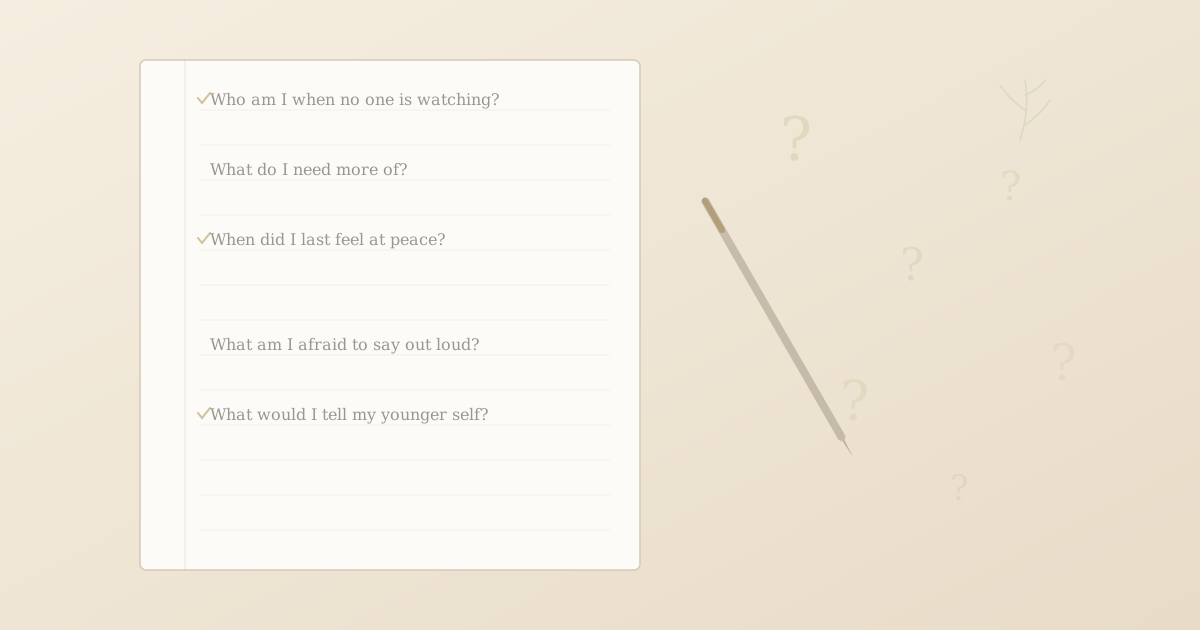
Structured reflection takes a different approach. You might write about a specific situation, then answer questions like "What am I actually afraid of here?" or "What does this remind me of?" This method helps you trace emotions to their roots and understand patterns in how you respond.
Letter writing, even if you never send it, can be powerful for processing conflict or unfinished conversations. Writing to the person involved, or to a younger version of yourself, or to your emotion itself, creates a form of dialogue that clarifies your feelings.
Time-based writing means setting a timer—perhaps ten or fifteen minutes—and writing continuously about one emotion or situation. The time boundary keeps it focused while the continuous movement keeps you from getting stuck in your critical mind.
Whether you use a paper notebook with a favorite pen or a digital diary app on your phone, tablet, or computer, the mechanism is the same. Both approaches are valid. Some people prefer the tactile experience of handwriting, while others find digital tools more convenient for regular practice. What matters is that you write consistently, in whatever format feels sustainable for you.
When Emotions Need More Than Writing
A diary is not a replacement for professional mental health support. If you are experiencing severe depression, thoughts of harming yourself, or trauma that feels overwhelming, please reach out to a therapist, counselor, or crisis line.
Writing is best understood as one part of caring for your emotional health, alongside human connection, professional support when needed, physical movement, sleep, and other practices that sustain wellbeing. A personal diary is a supplement to these things, not a substitute.
That said, many therapists recommend diary writing to their clients as part of treatment. The practice complements professional support by giving you a way to process between sessions, track patterns, and deepen your self-awareness.
Starting Your Emotional Diary Practice
If you are new to writing for emotional processing, you do not need special equipment or elaborate rituals. Find a notebook you like or open a notes app on your phone. Set aside fifteen minutes when you will not be interrupted.
Write about what you are feeling right now. Do not worry about grammar, structure, or making sense. Just let the feelings become words. Some days that might be three pages; other days, three paragraphs. Both are fine.
Do this regularly. The real benefit of diary writing comes not from a single entry, but from the cumulative practice of turning inward and witnessing your own experience over time. As you build this habit, you will notice that difficult emotions feel less isolating. You will understand yourself more deeply. You will develop trust in your own capacity to move through hard things.
The Quiet Transformation
Writing about your emotions will not make them disappear. Grief does not vanish after a diary entry. Anxiety does not resolve from a single writing session. But something slower and more fundamental shifts.
Each time you write, you are saying to yourself: my feelings matter. My inner world is worth paying attention to. I am capable of understanding myself. Over weeks and months, this practice becomes a form of self-trust. You learn that you can sit with difficult emotions without being destroyed by them. You learn that you are more resilient than you thought.
Your diary becomes a record of your own becoming—how you moved through pain, what you learned about yourself, where you found strength. It is not meant to be perfect or polished. It is meant to be true. And in that truth lies the quiet, steady power to help you process whatever comes.