
The Best Time of Day to Journal (and How to Find Yours)
Morning journaling gets most of the attention, but the best time to journal is the one that fits your life and the kind of thinking you want to do.
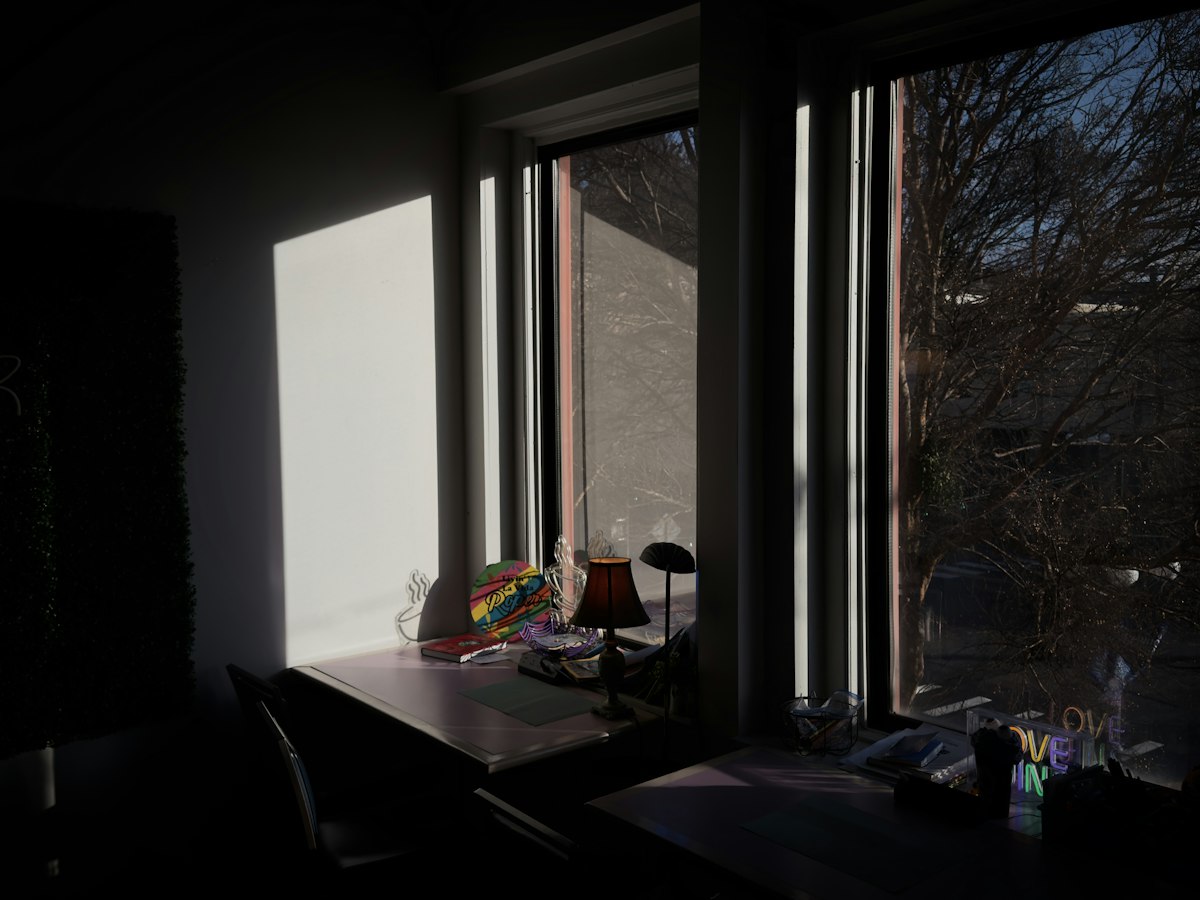
Morning journaling has the loudest advocates. Write before the day begins, before the inbox, before anyone needs anything from you — and there is a real case for it.
But the question of when to journal is usually answered with more confidence than it deserves. The honest answer is that different times of day produce different kinds of writing, and the best one for you depends on what you want the practice to do and when you are actually free.
The wrong time, chosen because it is supposed to be the right one, is how most journaling habits quietly end.
What Changes Across the Day
Your mind is not the same instrument at seven in the morning and ten at night, and the writing reflects that.
Early in the day, before the day's events have accumulated, you have less material and more access. Thoughts are closer to the surface. What comes out tends to be about intention, unfinished business from yesterday, and whatever was still moving in the background overnight.
By the middle of the day you have material but little distance. Writing then is more reactive — closer to the thing that just happened, more useful for discharging something than for understanding it.
In the evening you have the whole day to look at and a tired mind to look at it with. The tiredness is not entirely a disadvantage. The internal editor gets tired too, and evening entries are often less guarded than morning ones.
None of these is better. They are different raw materials.
The Case for Morning
Morning writing is good at intention and at clearing.
Before the day has made any demands, you can write about what you want from it — not as goal-setting, necessarily, but as a way of deciding what matters before other people's priorities arrive and decide for you.
Morning is also where unfinished thinking surfaces. Something you were turning over yesterday has been processing overnight, and it is often available first thing in a way it will not be by noon.
The practical advantage is larger than the psychological one. Mornings are the most protectable part of most days. Nothing has gone wrong yet. No one has asked for anything. A ten-minute morning practice fails less often than a ten-minute evening one, simply because fewer things can displace it.
The cost is that morning writing can be thin. You have not lived the day yet, so there is less to write about. Some mornings produce three sentences about nothing in particular, and that is a fair description of what was there.
The Case for Evening
Evening writing is good at processing and at closing.
You have the day complete. You can see how it went, what stuck, which conversation is still sitting with you. The material is there, which is the opposite of the morning problem.
Writing at night also does something practical for sleep. Many people lie awake running through the day or the next one. Putting it on paper first — tasks, worries, the unresolved thing — moves it out of the loop it would otherwise run in. This is not a cure for insomnia, but for ordinary mental churn at bedtime it is a reasonable intervention.
The main difficulty is that evenings are unreliable. Work runs late, plans appear, and by ten o'clock the energy to write is often gone. Evening practices need more protecting than morning ones.
The second difficulty is that late writing can slide into rumination. If you find that evening entries leave you more agitated than when you started, that is worth noticing. Some people do better writing at eight than at eleven, and some do better writing in the morning about the previous day.
The Overlooked Middle
Midday journaling is rarely recommended and suits more people than you would expect.
A lunch break is often the only genuinely free window in a day that has been scheduled by other people. Ten minutes with a notebook in the middle of a working day does something the other times cannot — it interrupts the momentum while the day is still in progress.
This is particularly useful if your days tend to run away from you. A morning entry sets an intention that the day then ignores. A midday entry is a checkpoint, where you can notice the drift while there is still time to do something about it.
It is also the best time for writing through something that is actively going wrong. You do not need to wait until the evening to put a difficult morning on paper.
What Actually Determines Your Time
Four things, roughly in this order.
When you are reliably free. This dominates everything else. A theoretically ideal time that is not actually available produces no writing. Look at your week honestly and find the window that exists most days, not the one that exists on your best days.
What you want the practice for. Writing to manage anxiety before it builds suggests morning or midday. Writing to process and put the day down suggests evening. Writing to capture ideas suggests carrying the notebook and ignoring the clock entirely.
When your mind is usable. Some people are genuinely incoherent before nine and genuinely alert at eleven at night. Working against your own chronotype to satisfy an article about morning routines is a poor trade.
How much resistance the time carries. If the thought of writing at a given time produces a small flinch, that is information. Notice which time you would rather not, and try the other one.
Testing It Rather Than Deciding It
You cannot reason your way to the answer. It is faster to run a short experiment.
Take two weeks. Write in the morning for the first week and in the evening for the second. Keep the entries short — five minutes is plenty — because you are testing the time, not the depth.
At the end, look at two things. Which week produced more entries, and which entries were more useful to read back.
These often disagree, which is the interesting part. Some people write more in the morning and write better at night. If so, the practical answer is usually the frequency, not the quality, because a practice that happens beats a practice that would be excellent if it happened.
If both weeks went badly, the time is not the variable. Try shortening the entry or changing where you sit.
Two Times, Two Purposes
Some people end up splitting the practice, and it works well when the two halves are doing different jobs.
A common arrangement is a very short morning note — one or two lines about what the day needs — and a longer evening entry for processing. The morning piece is small enough that it does not compete with getting out of the door.
Another is a midday capture page and a weekly longer entry at the weekend, which suits people whose weekdays have no usable gaps at all.
The failure mode is obvious enough to name. Two commitments are harder to keep than one, and a split practice often collapses into neither. If you try it, make one of the two the real one and treat the other as optional.
Consistency Matters More Than the Hour
Whatever you choose, the same time each day does most of the work.
This is not because there is anything magical about the hour. It is because a fixed time removes a decision. If journaling happens after you put the kettle on, you do not have to decide each day whether now is a good moment, and the decision is where most practices are lost.
Anchoring it to something physical helps more than anchoring it to a clock. After the kettle. After you close the laptop. After the last person goes to bed. These are easier to notice than eight o'clock, and they survive days when the schedule shifts.
When to Change It
A time that worked can stop working, usually because the life around it changed. A new job, a baby, a different commute, a season with less daylight.
If the practice has quietly stopped, look at the time before you conclude anything about your discipline. Often the window closed and the habit had nowhere to go.
Moving it is not a failure. A journaling practice that has been morning for three years and needs to become evening for the next two is a practice adapting correctly.
The point was never the hour. The point was finding a place in the day where the notebook opens without a struggle, and then leaving it there for as long as it keeps working.
Was this article helpful?
Thanks for your feedback!


